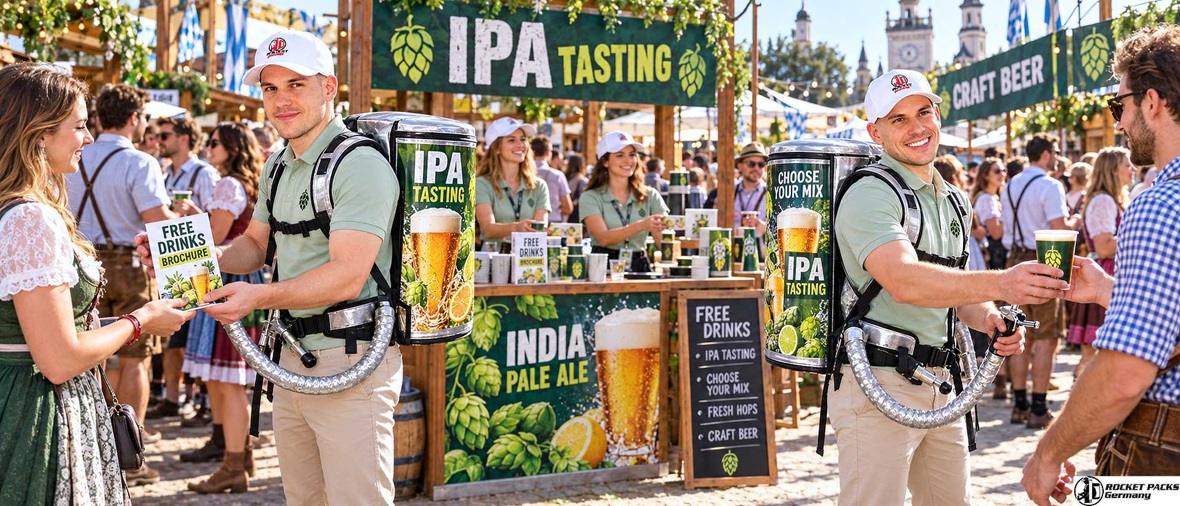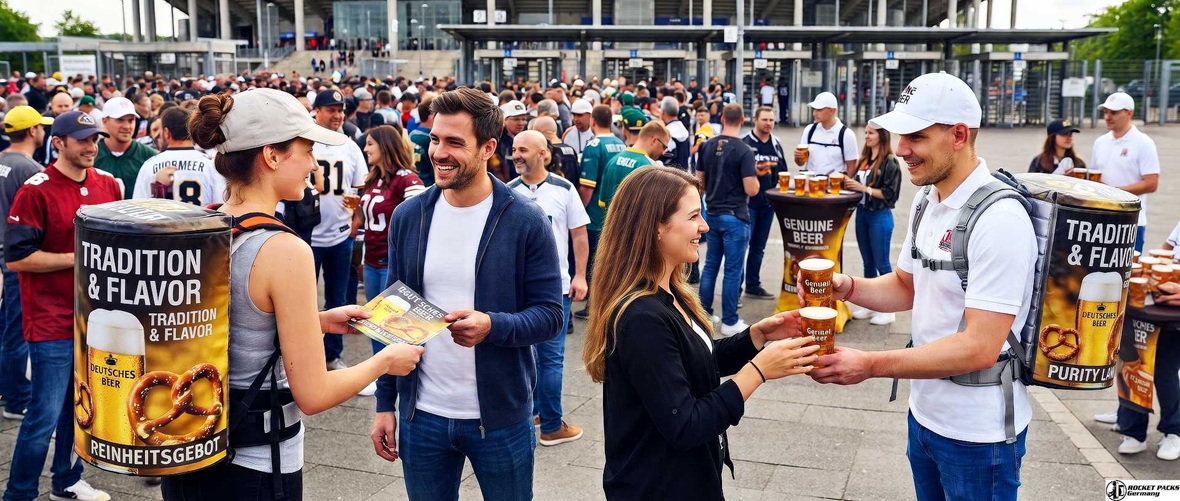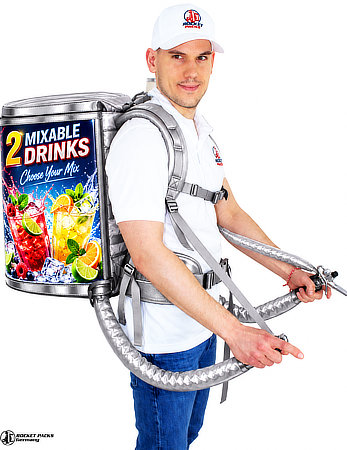
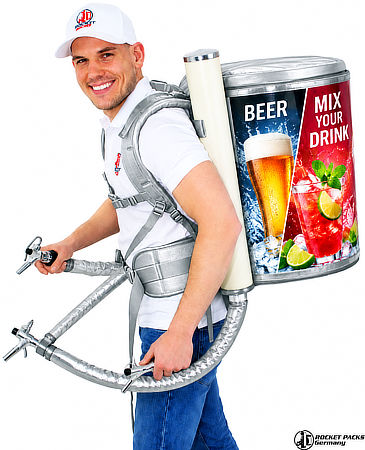
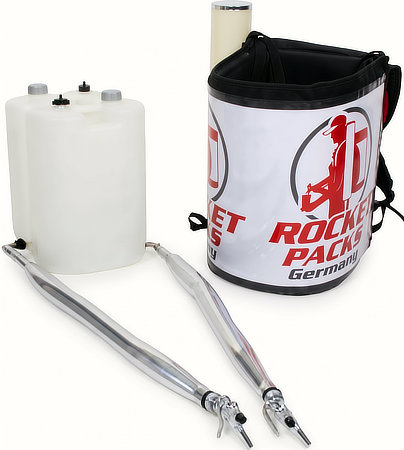
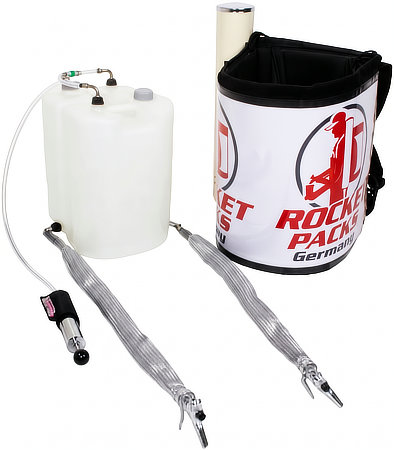
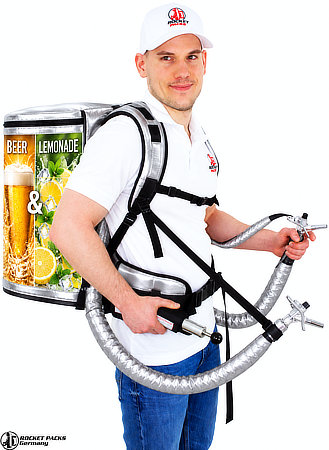
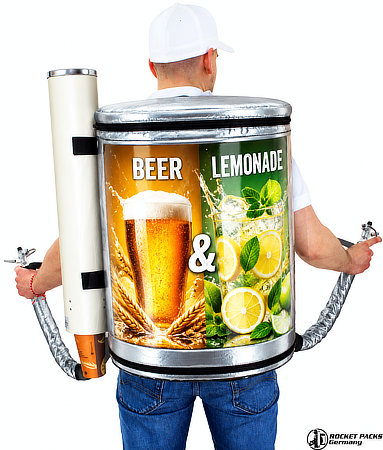
- Beer backpack Combi with 2 containers of 15 litres to serve different Beers!
- Mobile Beer Distribution Backpack
The beer backpack has two super-light plastic tanks made of PP that can be dispensed independently.
- A PE beercontainer with 15 litres capacity includes a Beer line, insulation, sheathing, and GV tap!
- Promotion flag with the foldable pole- Weatherproof foil pouch in signal color -
For dispensing CO2-containing beer, (Mochila con dispensador de cerveza ) additional pressure accessories are required. Mechanical air pump, steel housing (only necessary as a booster for dispensing pressure)
Promotion flag with the foldable pole- Weatherproof foil pouch in signal color.
Containers are also convincingly reflected in other beerbackpacks.
Why Global Stadium Operators Trust Rocketpacks Beer Backpack Engineering
- Basic equipment excl. Pressuring accessories Premium tap, complete with pipe, insulation, jacket, and container connection part.
- Thus, two different beers can be served simultaneously with this device.
- Professional Beer Backpack System Video

Beer Backpack Video
This is what makes this backpack so exceptional. That has been developed for the dispensing of CO2-containing beverages and other products. It stands out due to its light but sturdy design.- The beer backpack can be used with both hot and cold beer.
- This enables two different kinds of beers to be dispensed at the same moment.
Advanced CO2 Pressure Solutions for Munich’s Iconic Festivals and Arenas
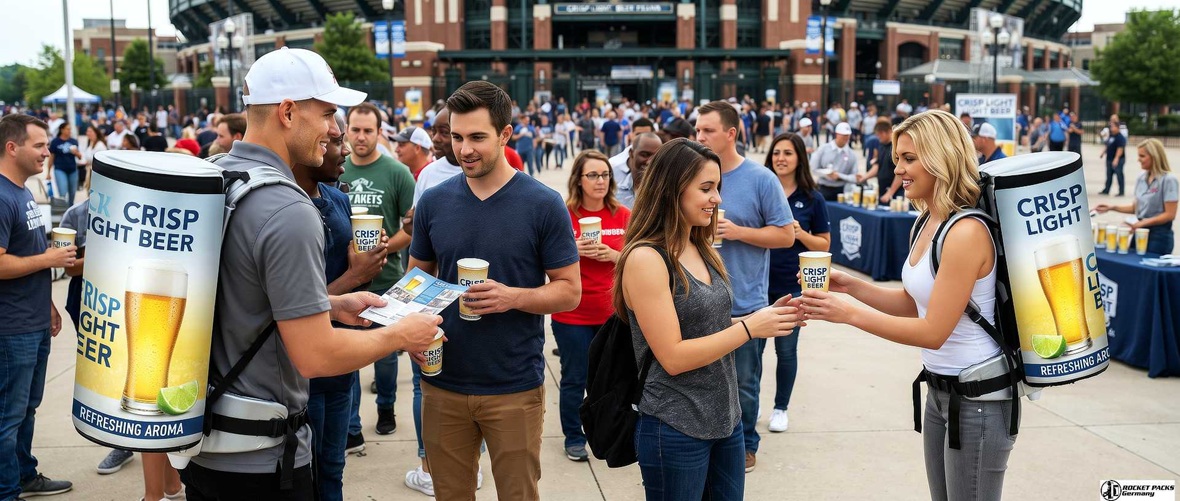
- The large decoration area brings out every trademark to its best advantage.
- Rocketpacks' has many years of experience in the production " Sac a dos bière Distributeur " of backpacks.
FAQ – Kombi 2 x 15-Litre Beer Backpack
The Kombi beer backpack contains two separate 15-litre PE beverage containers, two beverage lines and two dispensing taps. Each side can be filled and emptied independently, allowing two beers or two separately prepared beverage batches to be carried in one mobile system. The carbonated version uses a hand-operated air pump with a T-coupler as the dispensing-pressure source. :contentReference[oaicite:0]{index=0}
When is a two-container beer backpack more useful than a single-tank model?
The dual-container model is useful when an operator must offer two beers during the same service round or when one beer supply should be divided between two independent circuits. It can reduce the need to return immediately when one side becomes empty.
The additional capacity is only advantageous when the expected demand justifies the carried quantity. For short routes or a limited number of customers, two smaller working fills may be more practical than loading both containers completely.
Can the two containers hold different beers?
Each tank has its own beverage line and tap, so two beers can be dispensed separately. One side may contain lager and the other alcohol-free beer, for example, provided that both products have been tested with the selected filling and dispensing procedure.
The operator must be able to identify both sides without hesitation. Similar-looking beers should not rely on visual recognition in the cup alone.
Can both tanks be filled with the same beer?
Both containers can carry the same beer when the objective is to divide a larger supply between two independent beverage paths. This can be useful when one circuit needs to be taken out of service or when the operator changes to the second side after the first tank is empty.
The two batches should still be documented separately. Different filling times, temperatures or transfer procedures can cause the beer on one side to behave differently from the beer on the other.
How should the starting quantity in each container be selected?
The quantities should reflect the expected demand for each beer rather than being divided equally by default. When one product is ordered more frequently, its container can receive the larger working fill.
A practical test should record how much remains on each side after a normal round. Repeatedly returning with one tank almost empty and the other largely unused indicates that the starting ratio needs to be changed.
Does the 2 x 15-litre specification mean that 30 litres should always be carried?
The stated capacity describes the two containers, not the mandatory operating load. The working fill must take account of the beverage, required pressure space, route, operator and expected number of servings.
Carrying unused beer increases physical strain and may extend the time that the product remains inside the mobile system. A lower fill can create a more manageable round even though the backpack provides a higher nominal capacity.
How heavy is the carbonated version before beer is added?
The carbonated configuration has an empty weight of approximately 6.5 kilograms. The beer, cups and other carried items must be added to this value when the actual load is calculated. The backpack measures approximately 52 centimetres high, 36 centimetres wide and 40 centimetres deep. :contentReference[oaicite:1]{index=1}
Before an event, the complete prepared unit should be weighed and tested by the assigned operator. Capacity alone does not show whether the load is suitable for stairs, long routes or extended service periods.
Why does the changing balance between both tanks matter?
The backpack becomes uneven when beer is dispensed faster from one side. The fuller tank then contributes a larger share of the remaining weight and can pull the system towards that side.
The operator should report increasing imbalance before it affects walking or tap handling. Adjusting the initial filling ratio or ending the round earlier can be more effective than tightening the shoulder straps during service.
How are the PE containers filled with beer?
The 15-litre plastic containers are designed for open filling. Beer is transferred through the container opening rather than installed as a sealed commercial keg. :contentReference[oaicite:2]{index=2}
The backpack must stand securely while both tanks are prepared. Each closure, pressure fitting and beverage connection should be checked before the next container is filled.
How can foam be limited during open filling?
The beer should be cold and transferred with as little splashing and turbulence as possible. Pouring from a height or directing a strong stream against the bottom of the empty container can release carbon dioxide before dispensing begins.
Filling equipment, transfer speed and the condition of the original beer container all influence the result. The procedure must be tested with the actual beer rather than developed for the first time immediately before an event.
Why should the two filling vessels remain clearly separated?
Separate, labelled filling equipment reduces the risk of placing the wrong beer in a tank. The identification used at the preparation station should match the labels on the corresponding container, hose and tap.
When both beers use the same type of transfer vessel, staff should complete one side fully before starting the second. Handling both open containers simultaneously makes product assignment harder to control.
What does the hand-operated air pump do?
The hand pump generates the pressure required to move beer from the containers through the beverage lines. In the carbonated Kombi version, a T-coupler connects the pressure equipment to both containers. :contentReference[oaicite:3]{index=3}
The pump should be operated in controlled steps. The required pressure depends on beer temperature, container level, line resistance and tap adjustment rather than on a fixed number of pump movements.
Does the T-coupler mix the two beers?
The T-coupler belongs to the pressure side and does not join the beverage lines. Each beer remains inside its assigned container and leaves through its own hose and tap.
Pressure and beverage connections must not be interchanged. Their positions should be confirmed during assembly, and both beer circuits require an individual test pour before the backpack is worn.
Does air pressure preserve the carbonation of the beer?
The mechanical pump uses air to create dispensing pressure; it does not replace carbon dioxide lost from the beer. Filling, movement, temperature and time inside the open-filled container can therefore influence carbonation and foam.
The beer should be served within the planned operating period. A higher air pressure does not restore product carbonation and should not be used to compensate for beer that has become too warm or has been agitated excessively.
Why can the two beers require different tap settings?
Beer products can differ in carbonation, serving temperature and foam behaviour. Two taps on the same backpack may therefore need different flow restrictions even when both containers are supplied by the same pressure source.
The accepted setting should be established separately for each side. Adjusting both taps identically without comparing the finished portions can produce a suitable pour from one beer and excessive foam from the other.
When is the premium tap useful on this system?
The premium tap provides additional control over the beverage flow. This is useful when two beers react differently or when the operator must adapt the stream to the selected cup and working conditions.
Tap restriction cannot correct poor filling, excessive movement or unsuitable beer temperature. These factors should be checked before the flow setting is changed repeatedly.
What should be checked when one side pours normally and the other does not?
The affected circuit should be examined on its own. A functioning second tap only confirms that the other beer path is operating.
- Confirm the beer level in the affected container.
- Check the hose for compression or a sharp bend.
- Inspect the beverage and pressure connections.
- Confirm that the tap is not restricted too far.
- Check for residue or obstruction at the outlet.
- Compare the temperature and recent movement of both beers.
Increasing pressure before checking these points can worsen foam without removing the actual restriction.
How should the first pours from both taps be evaluated?
Each side needs its own test cup. The first pours fill the two beverage lines, confirm the product assignment and show whether the taps close correctly.
The test should compare flow, foam development and the condition of the beer after a short settling period. Both circuits must be accepted before the system enters the customer area.
How can serving errors between two beers be prevented?
The operator needs a simple identification system that remains visible during the complete round. Product names, colour markers or fixed left-and-right assignments can be used.
The same identification should appear on the menu, refill containers and internal preparation records. A complicated code understood only by the filling team is not sufficient for the person serving customers.
Can the two beers use different cup sizes?
Different cups can be used, but carrying and distinguishing two stacks makes the mobile sequence more complex. The supplied universal cup dispenser is designed for suitable disposable and reusable cups from approximately 100 to 550 millilitres with a rim diameter of about 60 to 95 millimetres. :contentReference[oaicite:4]{index=4}
When two formats are necessary, their storage and selection must be tested with the filled backpack. Using one compatible cup and two defined fill levels can simplify the process.
How should the beer backpack be handled after rapid movement?
The operator should stand in a stable position and allow the beer to settle before the next pour. Running, climbing stairs or placing the backpack down abruptly can agitate both containers.
The two beers may not respond identically. Staff should therefore check the first portion from the relevant side after strong movement rather than assuming that both taps will behave the same way.
What does passive insulation of up to two hours mean for beer service?
The insulated backpack slows temperature change but does not actively refrigerate the beer. The stated period of up to approximately two hours depends on starting temperature, filling quantity, ambient conditions and serving frequency. :contentReference[oaicite:5]{index=5}
Both beers must be chilled before filling. When one product is sold slowly, its actual mobile period may become longer than that of the more popular beer, so the temperature of each side should be assessed independently.
Why must both beer circuits be cleaned separately?
Each tank, outlet, hose and tap forms its own beverage path. Cleaning solution passed through one side does not clean the other circuit.
After service, both systems should be emptied, cleaned and rinsed individually. Beer proteins, yeast and dried foam can remain in the line and tap even when only a small quantity was dispensed from that side.
How can accidental flavour transfer be avoided after cleaning?
Hoses and taps should retain a clear side assignment when the backpack is regularly used for two different beers. This reduces confusion during reassembly and makes it easier to follow the cleaning history of each circuit.
Before refilling, clean water can be passed through both sides separately. Remaining odour, visible residue or restricted flow indicates that another cleaning cycle is required.
What should be inspected before the loaded system is given to the operator?
- Both containers contain the intended beer and working quantity.
- Tank, hose and tap assignments are clearly marked.
- Closures and seals sit correctly.
- The pressure line and T-coupler are connected as intended.
- Both beverage lines remain free of sharp bends.
- Each tap produces a controlled test portion.
- The cup format fits the dispenser.
- The load is balanced and the straps are adjusted.
- No unexplained moisture is present inside the cover.
The backpack should not be placed on the wearer until both independent circuits have passed the check.
Which information is required to configure the Kombi beer backpack?
A useful enquiry should describe each beer side separately.
- beer assigned to the first container,
- beer assigned to the second container,
- required serving temperatures,
- expected demand ratio between both products,
- planned working quantity in each tank,
- filling method and original beer packaging,
- required tap versions,
- cup capacities and rim diameters,
- number of backpacks and operators,
- delivery destination and event date.
These details allow us to assess whether the two 15-litre PE containers and the shared hand-pump arrangement suit the planned beer service or whether separate single-tank systems would be easier to control.