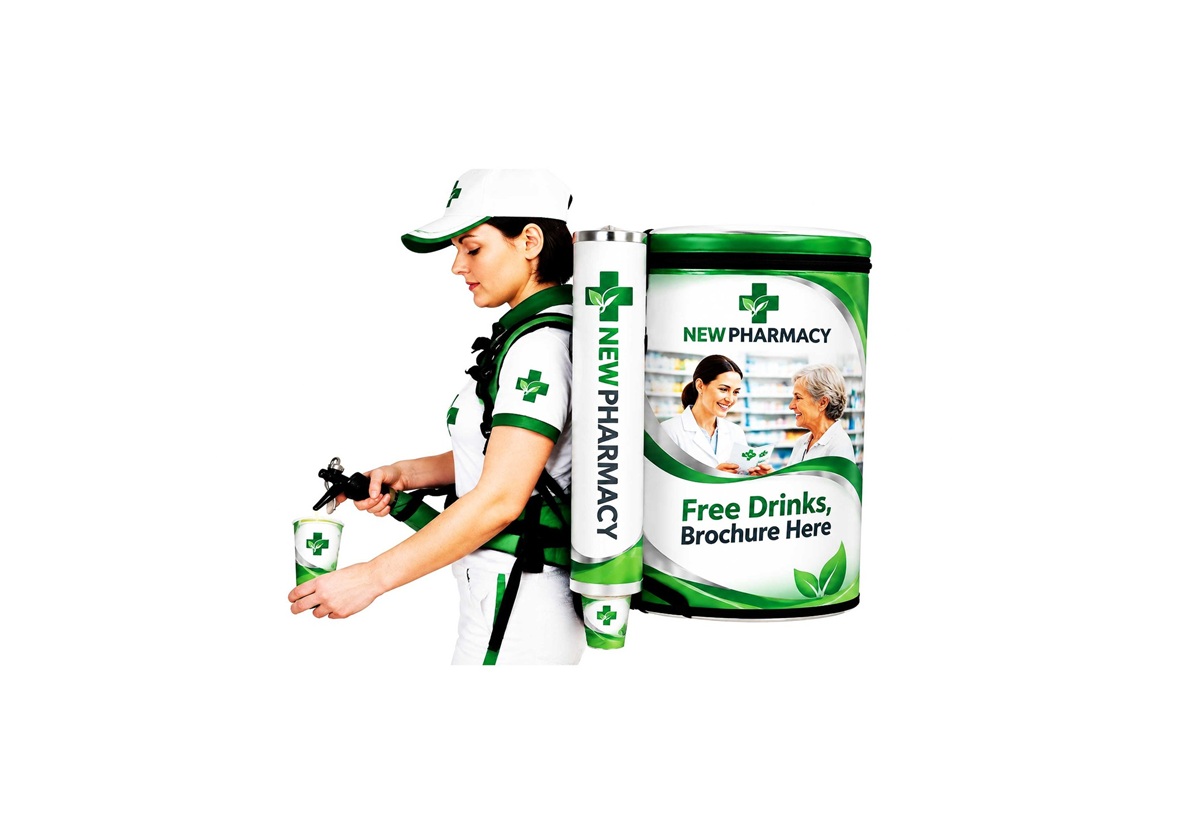
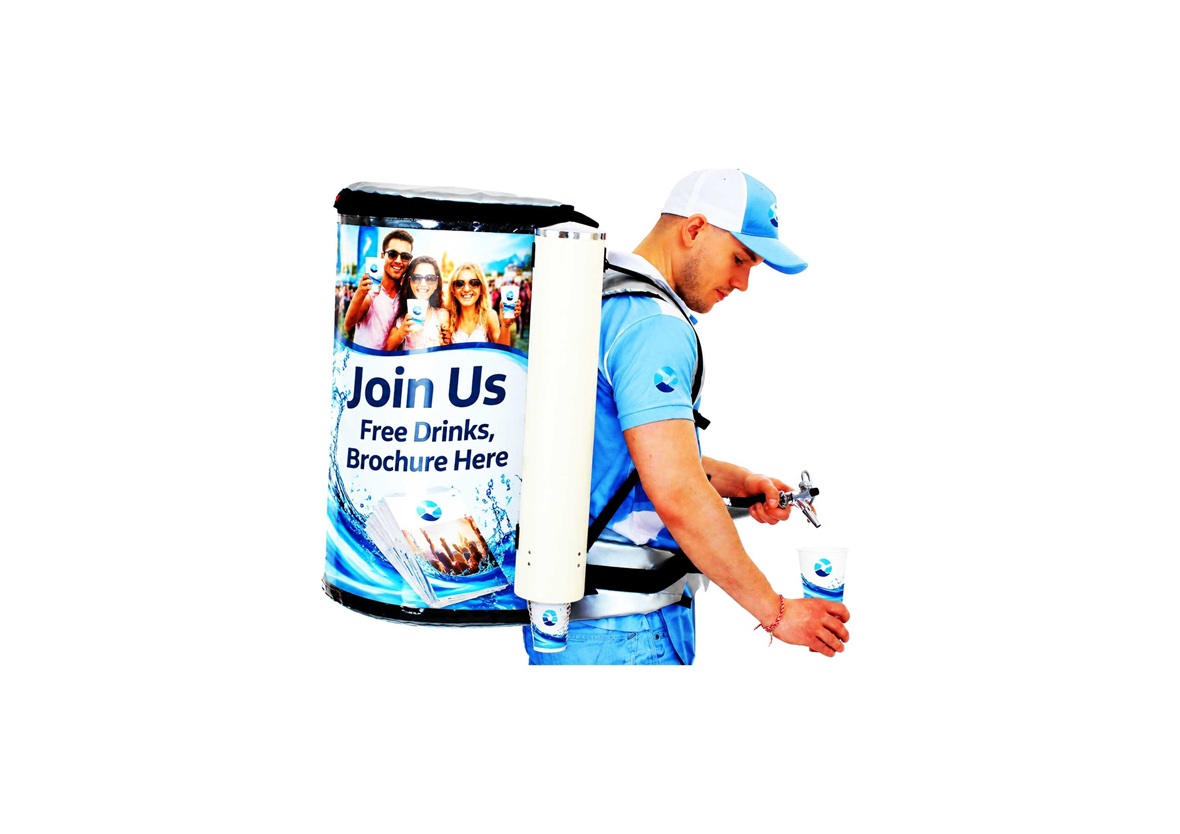
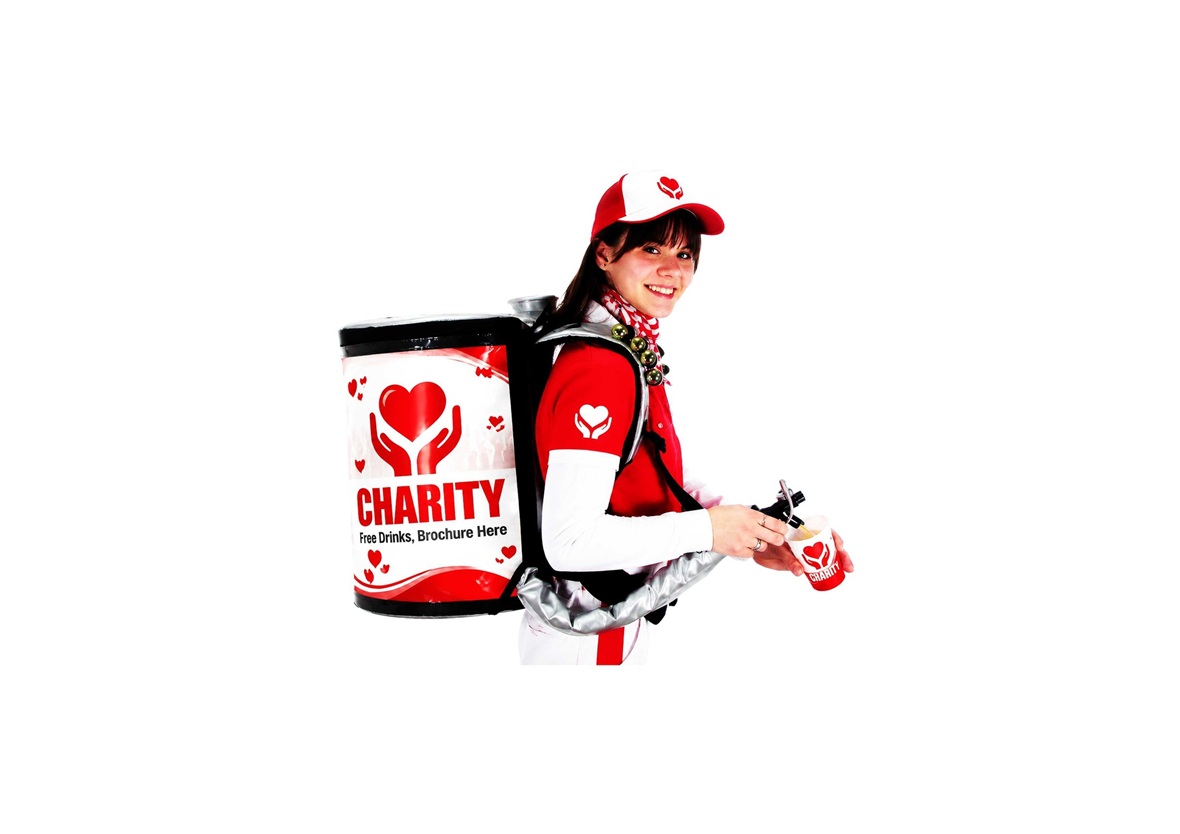
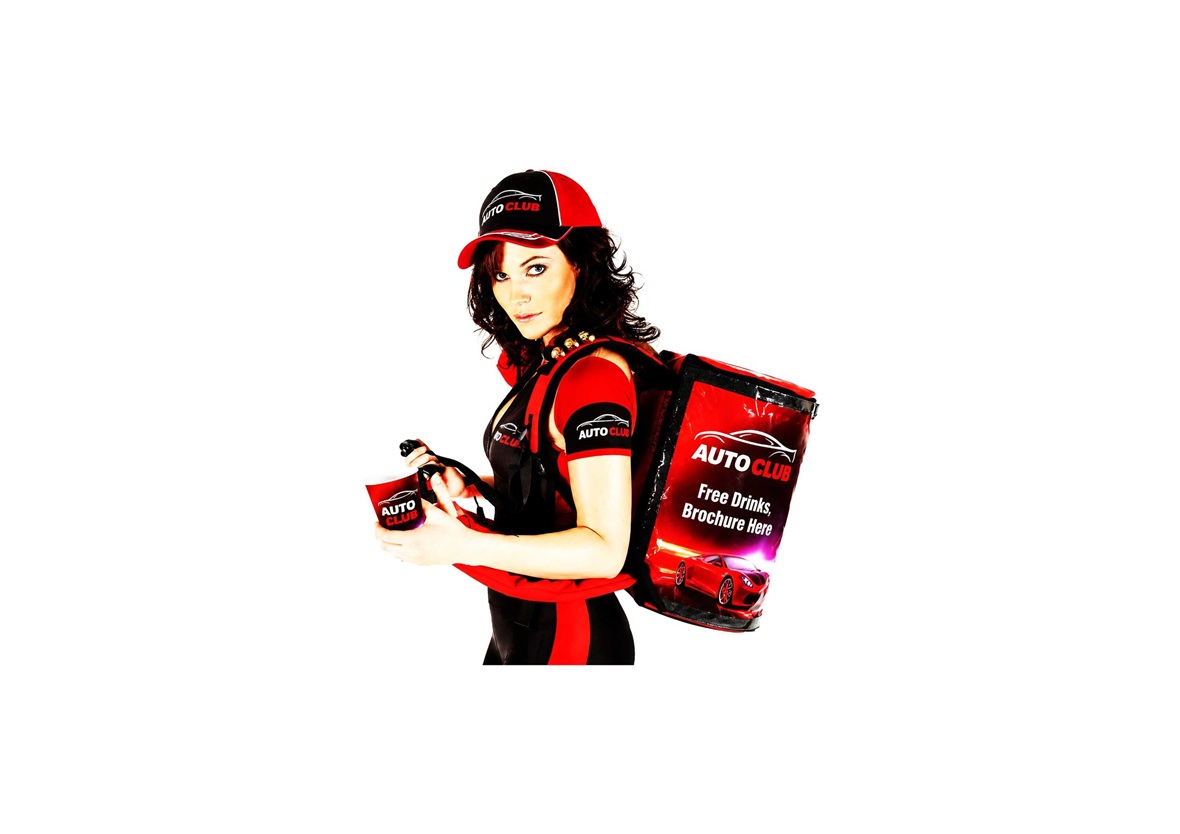
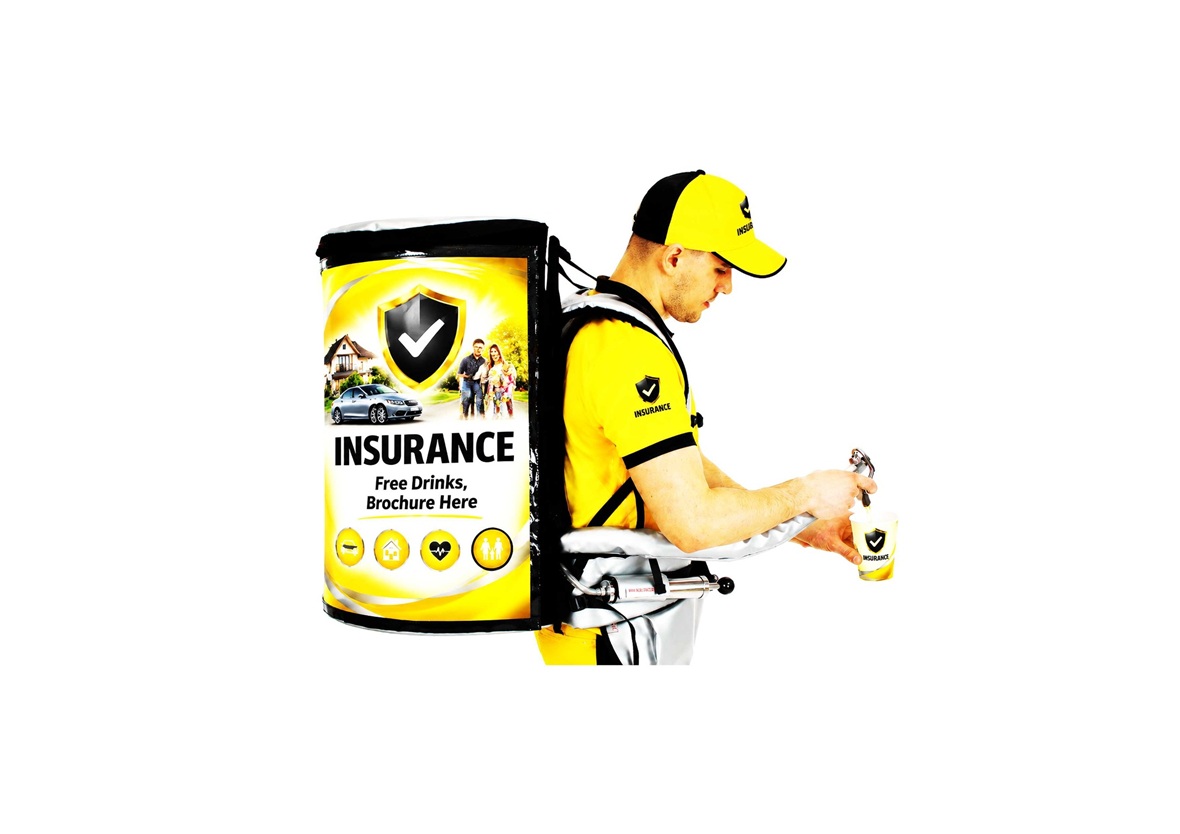
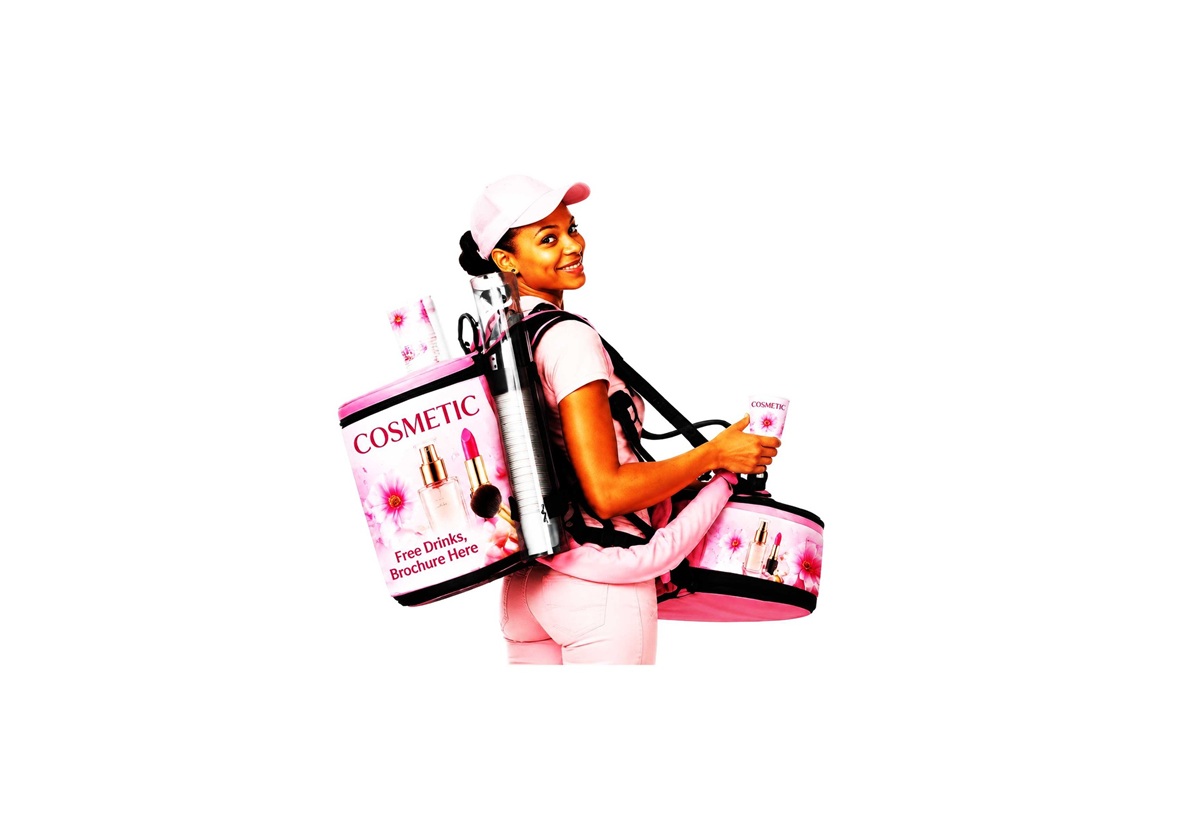
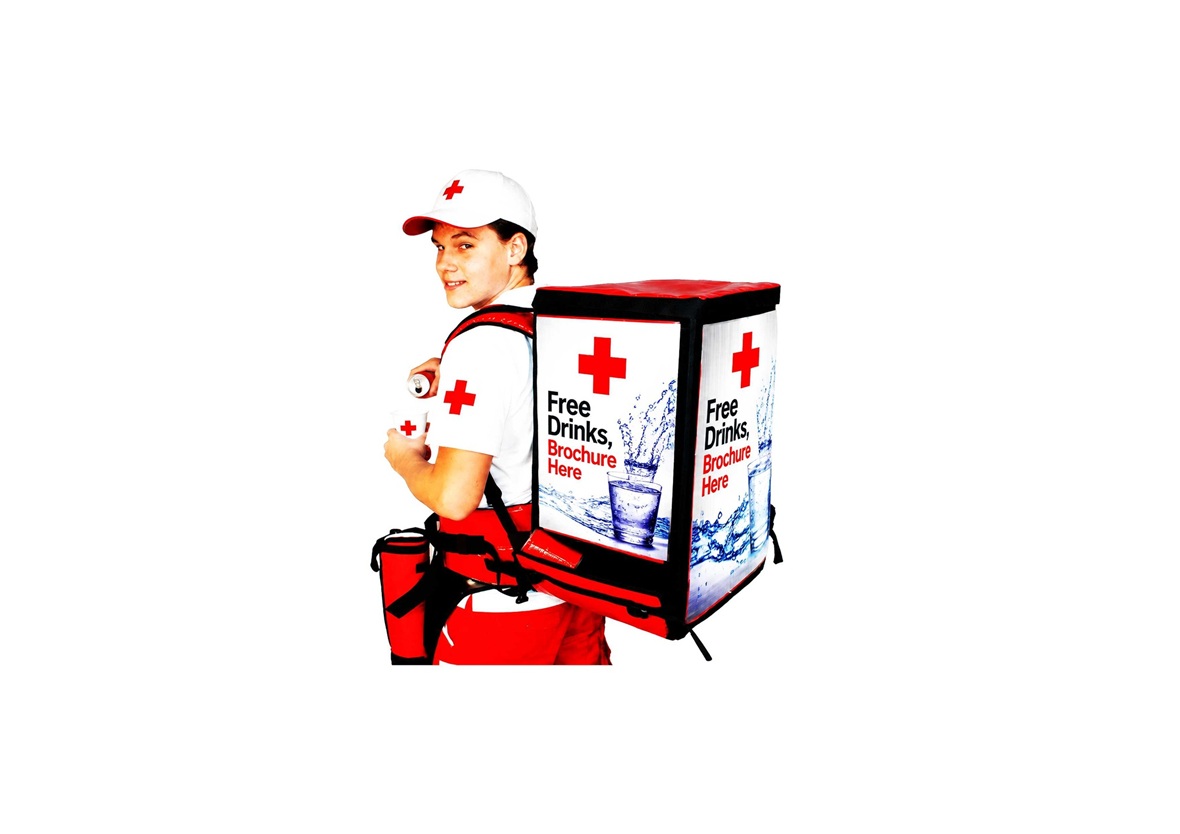
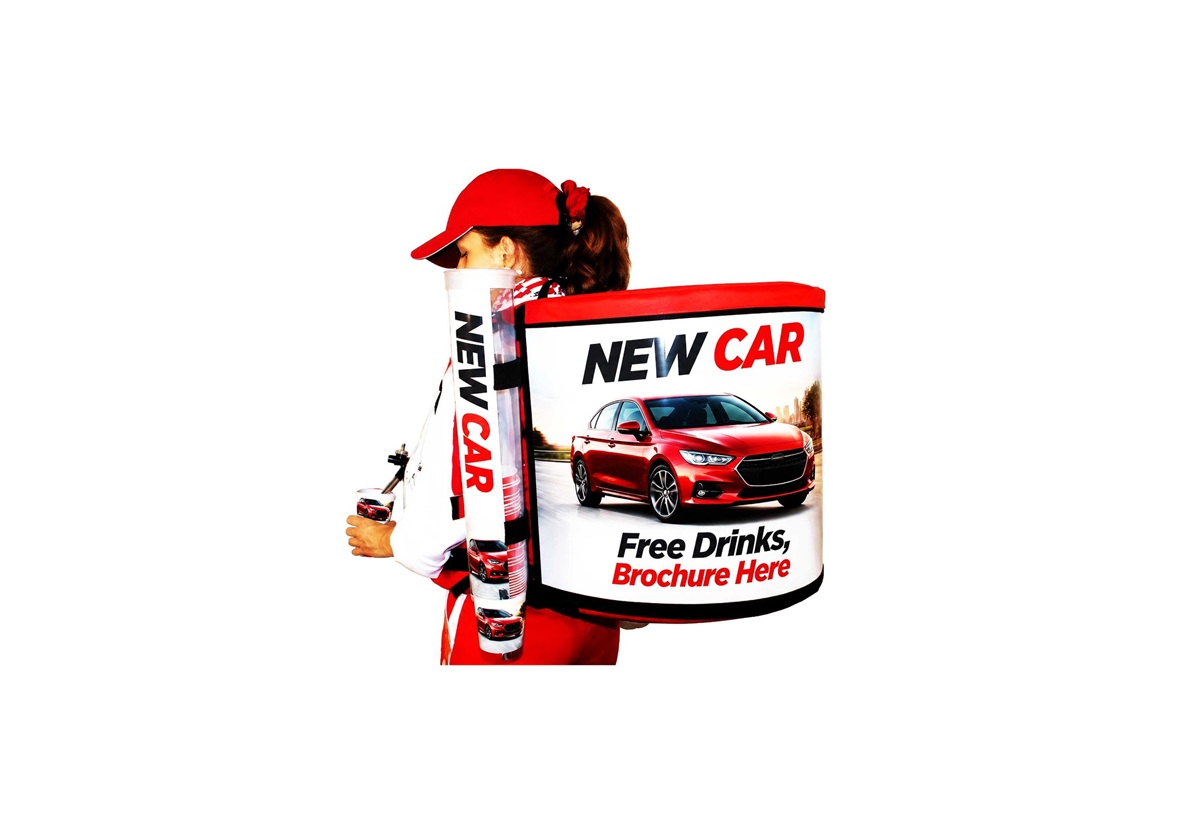
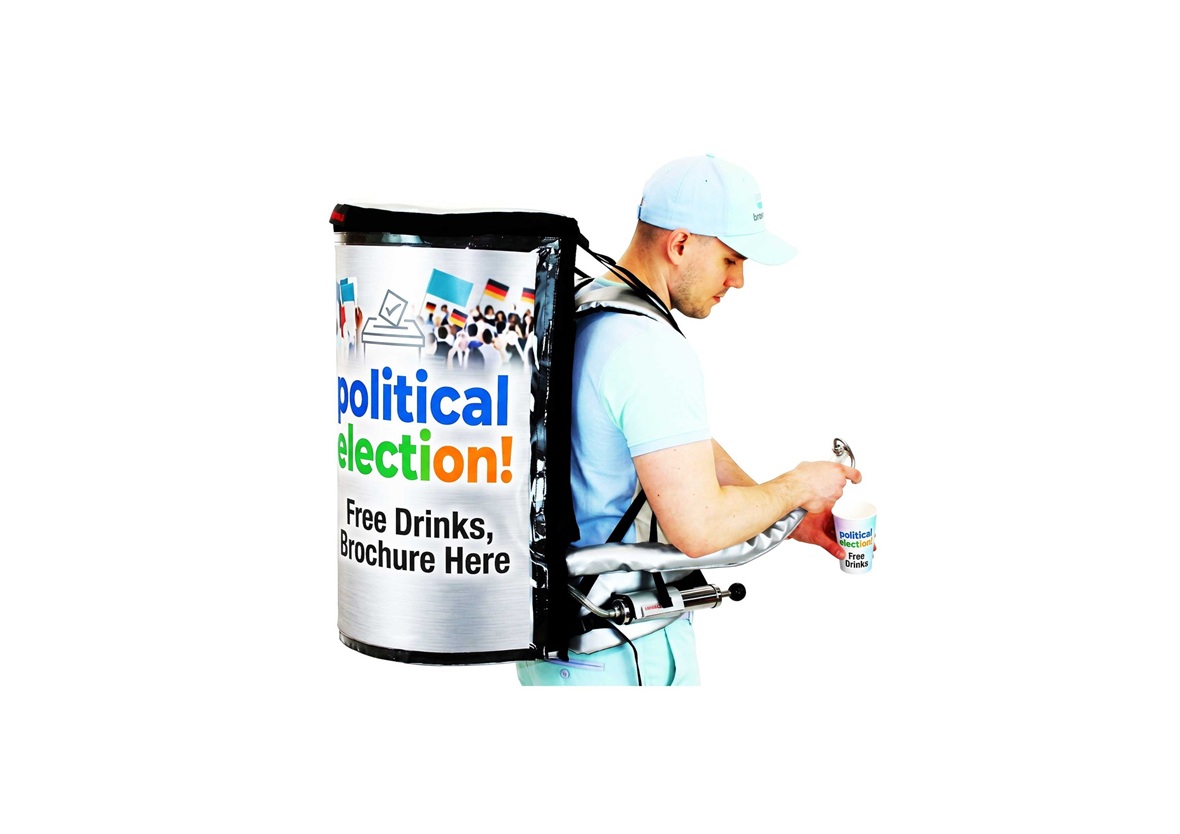
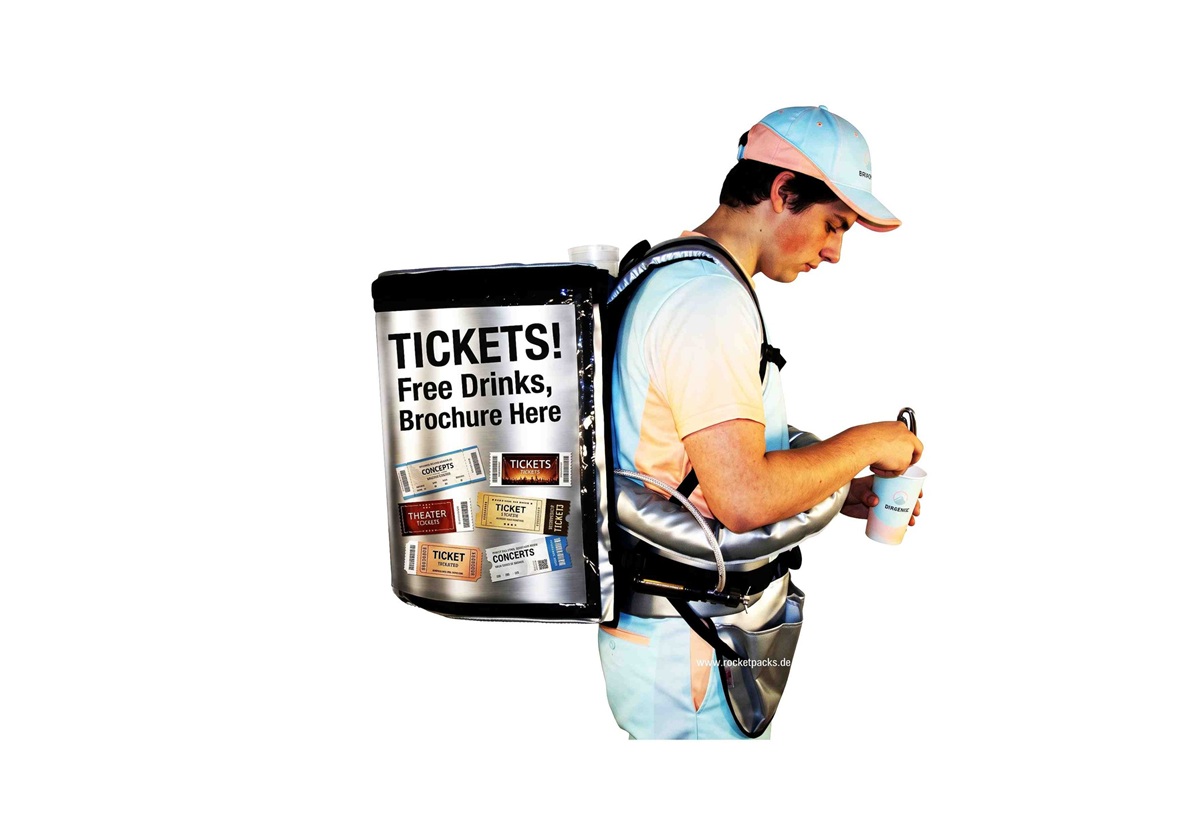
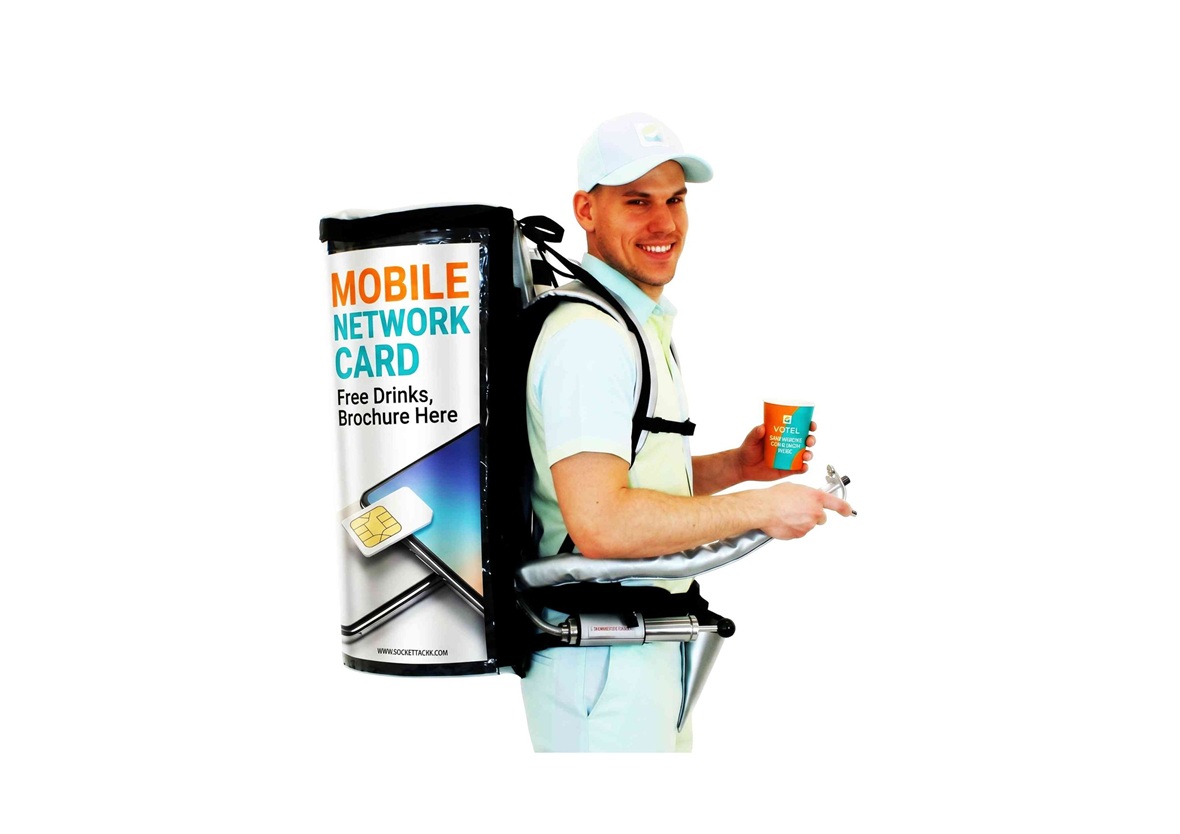
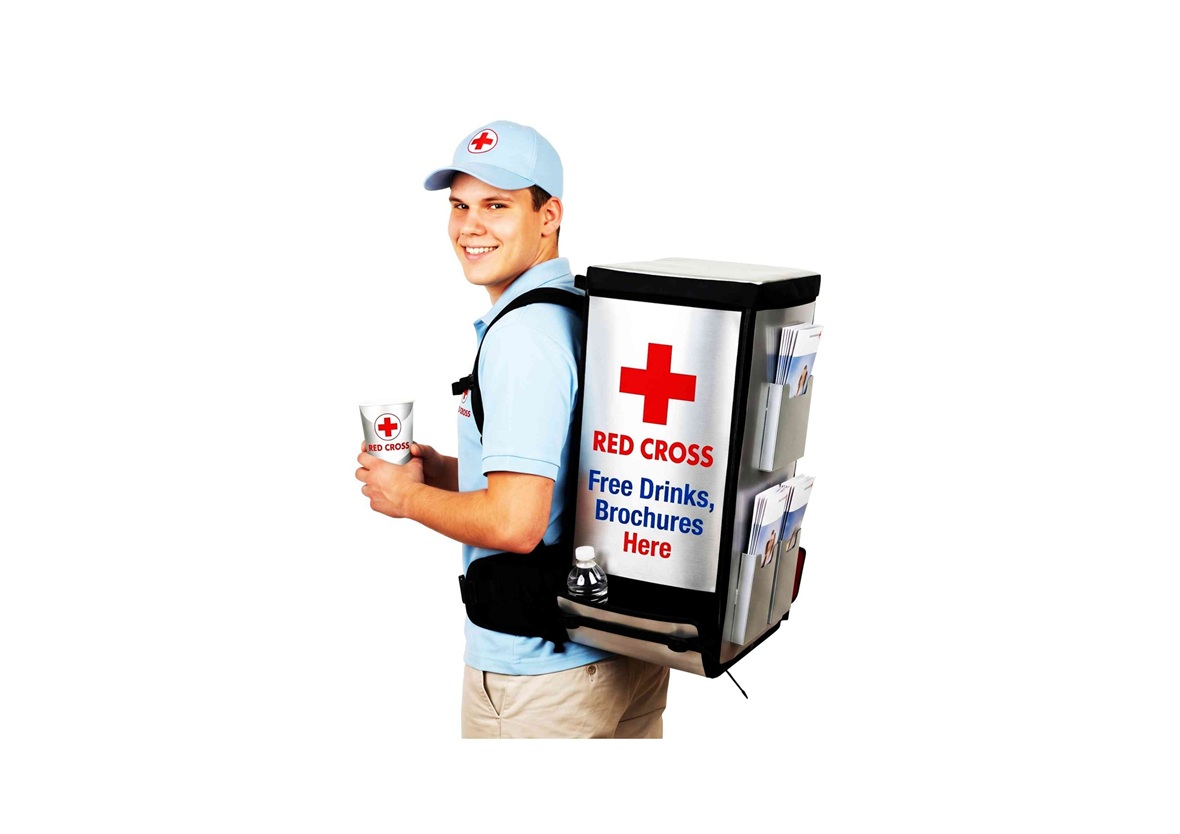
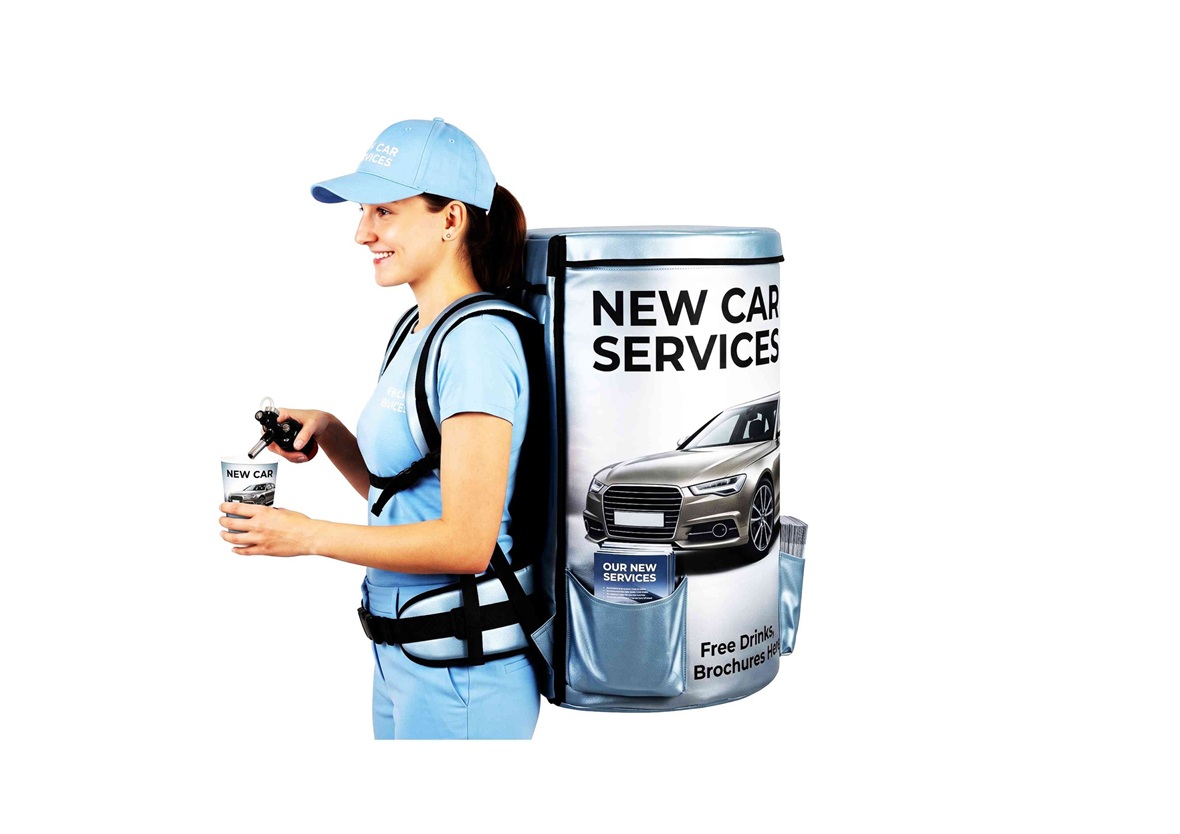
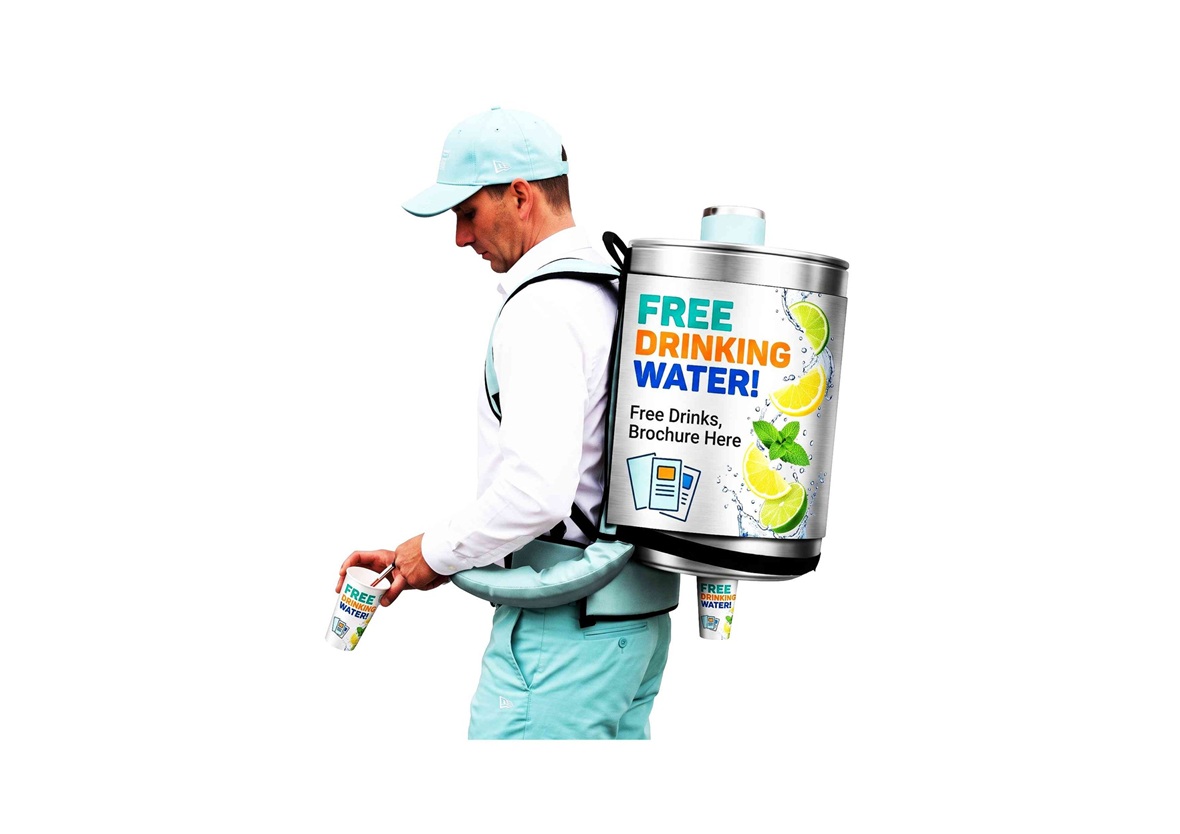
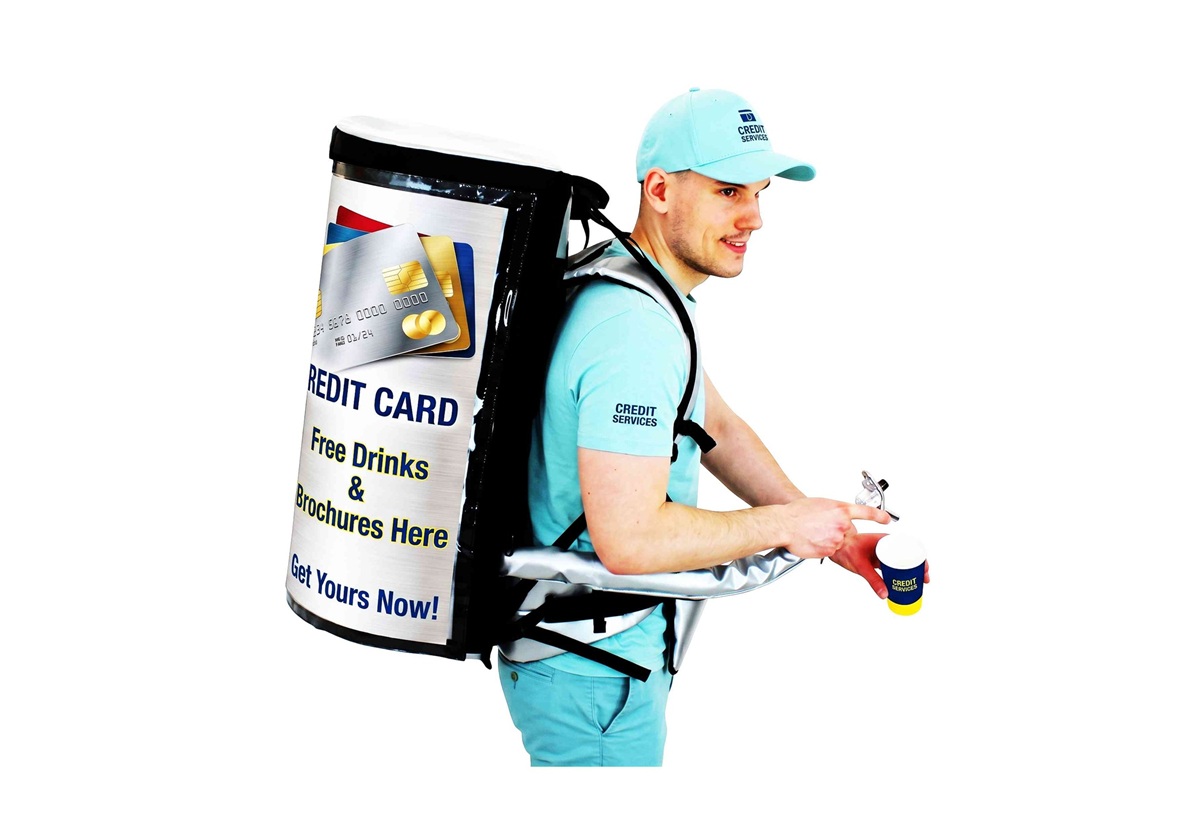
Promotion and sampling backpacks turn brand ambassadors into mobile advertising and customer engagement teams. They can be used across almost any industry to combine free beverage sampling with brochures, product information or other promotional materials.
Promotion & Sampling Backpacks for Mobile Brand Activations
Turn every customer interaction into a visible brand experience. Our promotion and sampling backpacks combine mobile beverage distribution with large customizable advertising surfaces, allowing promotional teams to reach customers directly while keeping your brand clearly visible.
Whether for product launches, free sampling campaigns, events, festivals, trade fairs or public promotions, the backpack can be customized with your individual campaign design and used to distribute beverages together with brochures, coupons or other promotional materials.
Promotion with Coffee – Strategy
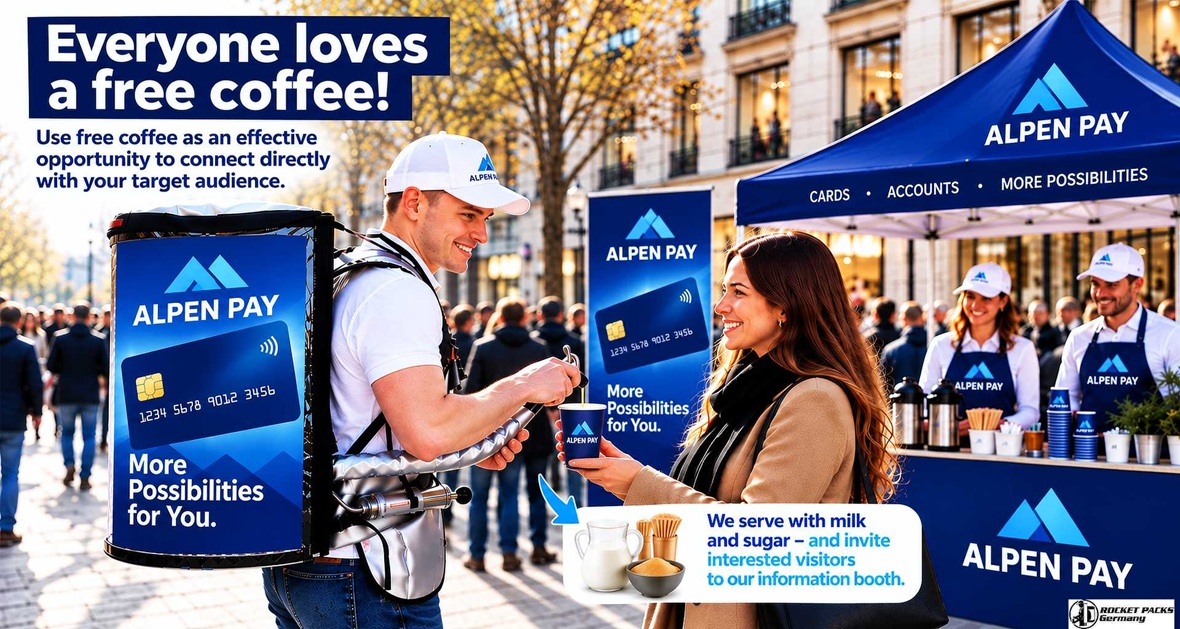
Coffee can be an effective door opener for promotional campaigns, even when the promoted brand, product or service has nothing to do with coffee.
Promoters equipped with a mobile coffee backpack can move freely around events, exhibitions, shopping areas or other promotional locations and actively approach potential customers. By offering a free cup of coffee, they create a natural and positive first interaction with visitors.
Turn a Free Coffee into Customer Interaction
The coffee can initially be served without milk and sugar. Milk, sugar and other extras are intentionally available at the main promotion or information stand. Visitors who want to complete their coffee therefore have a natural reason to visit the stand.
Once there, trained promotional staff have the opportunity to start a more detailed conversation, present products or services, distribute brochures or coupons, promote competitions, collect registrations or generate leads.
Suitable for Almost Any Industry
The promoted company does not need to sell coffee. The brand message can be communicated through the custom-branded backpack, promoter clothing, personal interaction and the promotional stand.
Promotion Strategy
Mobile promoter → Free coffee → First contact → Invitation to promotion stand → Milk & sugar → Personal conversation → Product information / Coupon / Registration / Lead generation
Mobile Street Promotion That Brings Your Brand Directly to Customers
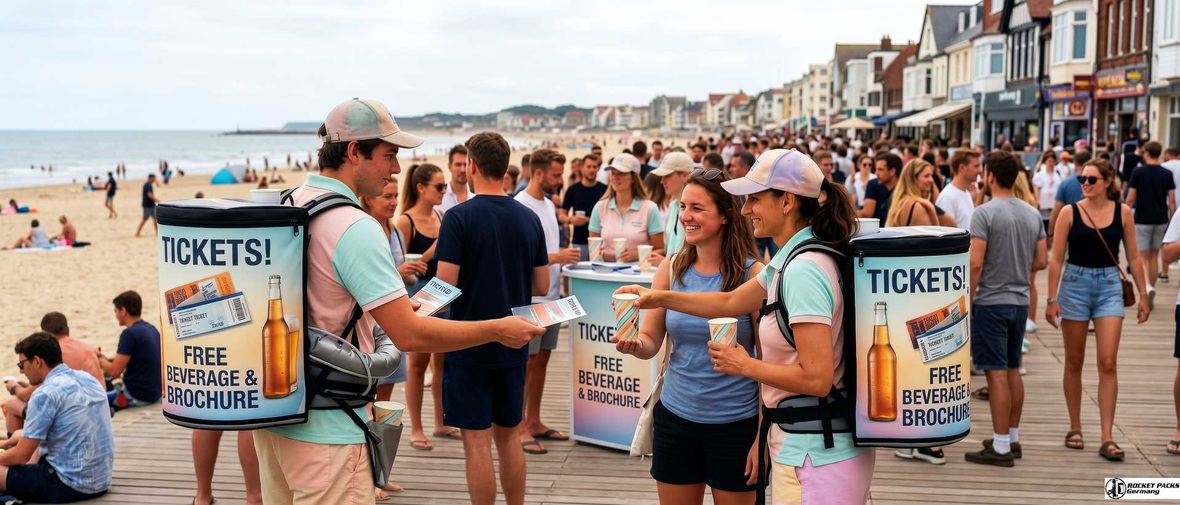
Take your promotion directly to your target audience. With a mobile sampling backpack, brand ambassadors can move freely through busy locations while distributing drinks, tickets, brochures, coupons or other promotional materials.
Instead of relying only on a fixed promotion stand, your team can actively approach potential customers and create personal brand interactions wherever people gather. The large advertising surface on the backpack keeps your campaign visible throughout the promotion.
This makes mobile sampling backpacks ideal for street marketing, product launches, ticket promotions, events, shopping areas, festivals and other high-traffic locations.
Product Launches with Mobile Sampling & Advertising Backpacks
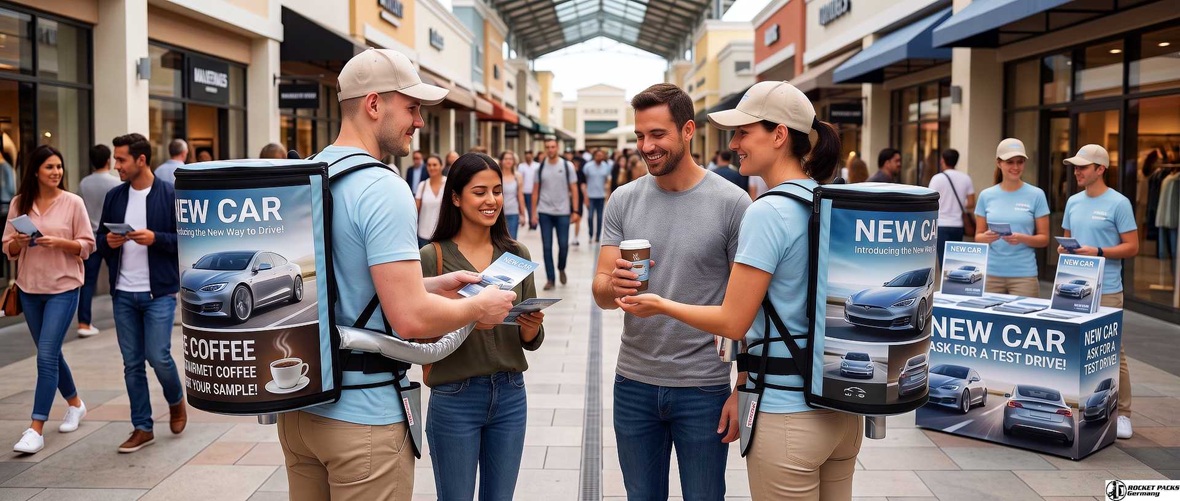
Bring new products directly to your target audience with a mobile promotion and sampling campaign. Brand ambassadors can distribute free drinks, product samples, brochures or promotional materials while introducing your new product in a personal and engaging way.
Large customizable advertising surfaces turn each backpack into a highly visible mobile advertising display. Your campaign artwork, product images and promotional message remain visible while your team moves through shopping areas, events, trade fairs and other high-traffic locations.
Combine the mobile promotion team with a central promotional booth to create additional customer contact points, provide further product information and guide interested visitors directly to your campaign or sales team.
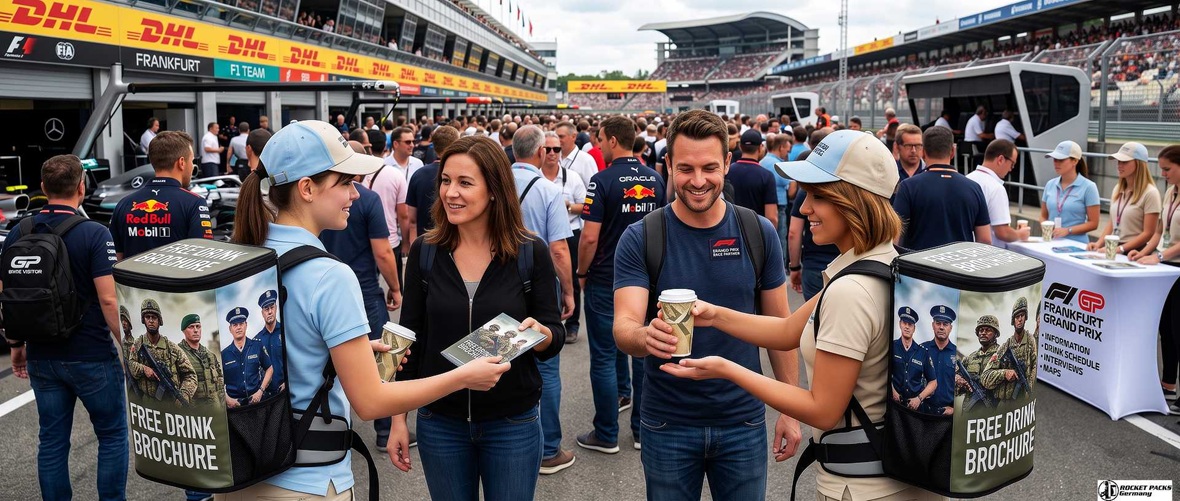
Event Sampling Backpacks for Sports Events & High-Traffic Venues
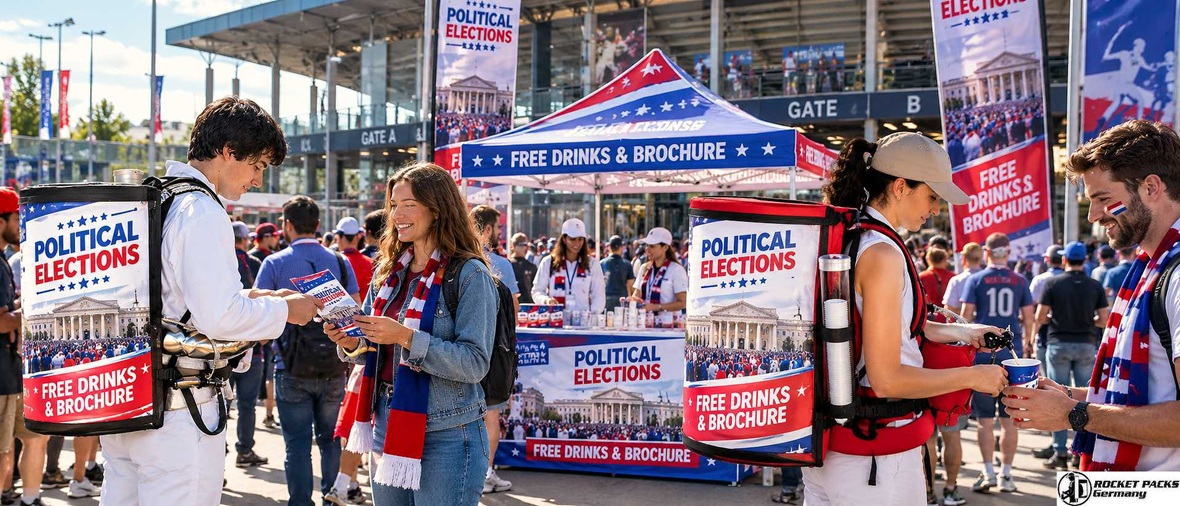
Reach visitors directly where the action takes place. Beverage sampling backpacks give promotional teams the flexibility to move through busy sports events, festivals and other high-traffic venues while distributing free drinks, samples and promotional materials directly to attendees.
The mobile system allows brand ambassadors to interact personally with visitors without being limited to a fixed sampling booth. Drinks can be served while brochures, product information, coupons or other campaign materials are handed out during the same customer interaction.
Large customizable advertising surfaces provide additional brand visibility throughout the venue, turning each promoter into a mobile advertising presence while supporting your sampling campaign directly among the crowd.
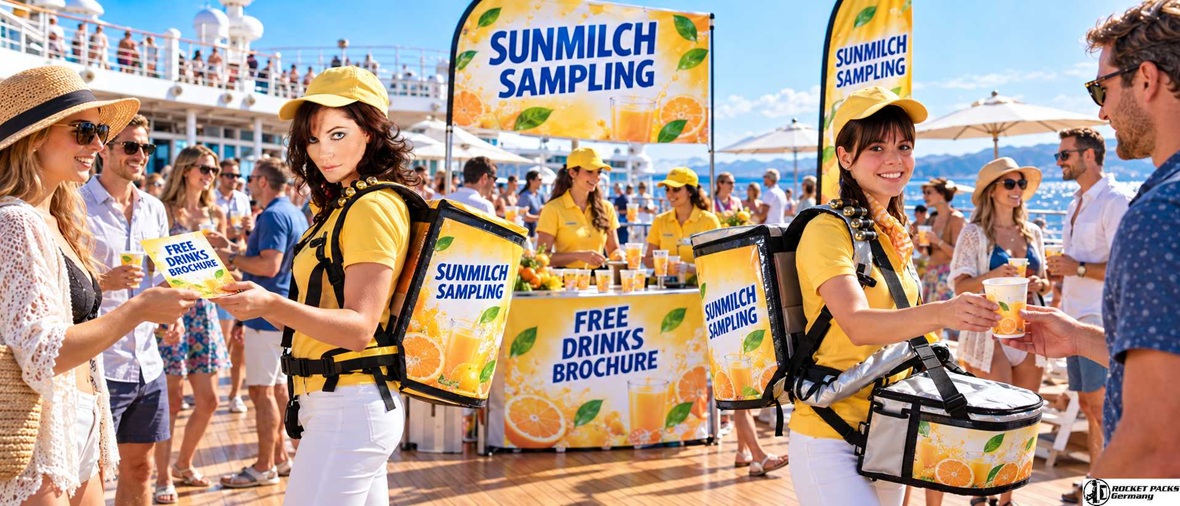
Product Sampling & Experiential Marketing with Mobile Brand Ambassadors
Create direct and memorable customer interactions with mobile product sampling. Equipped with beverage backpacks, brand ambassadors can approach visitors personally, serve free drinks and distribute brochures or other promotional materials directly to the target audience.
Mobile sampling teams can operate independently throughout the venue or complement a central promotion booth. This combination extends the reach of your campaign while creating multiple opportunities for customers to discover, taste and engage with your product.
Customizable advertising surfaces on the backpacks, cups and promotional materials create a consistent campaign appearance and keep your brand visible throughout the entire activation.
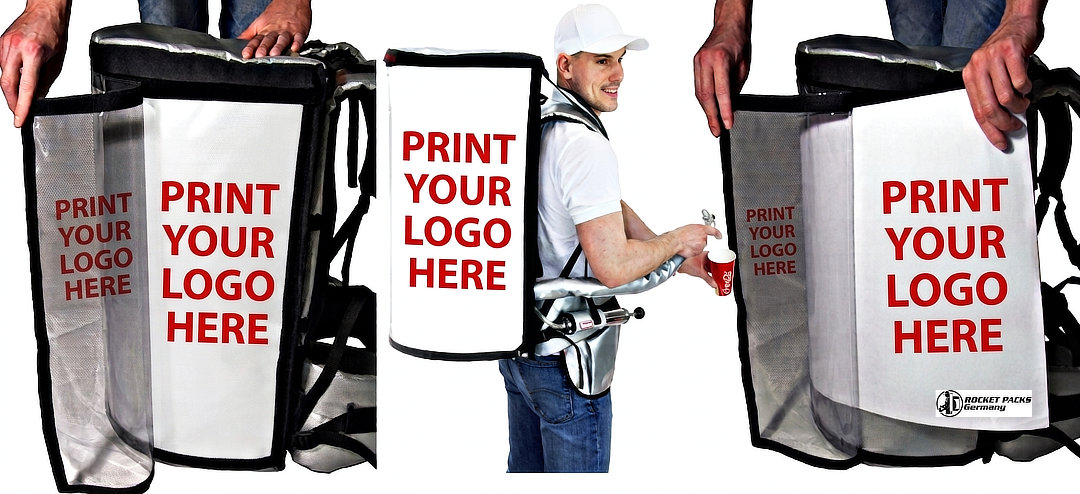
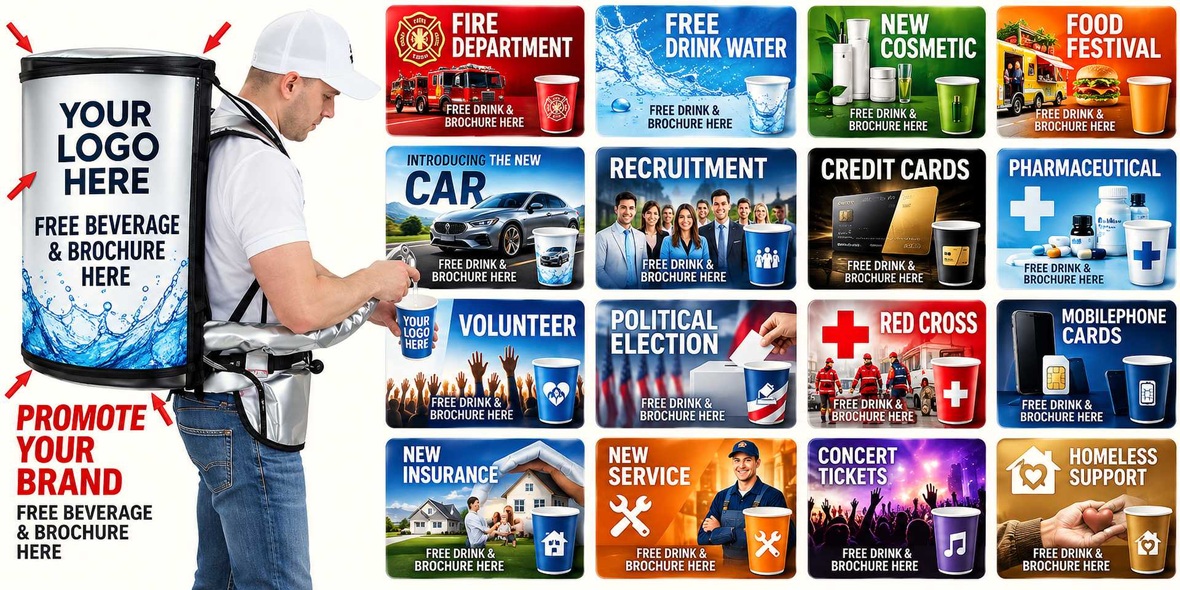
Custom Branding for Maximum Brand Visibility
The large advertising surfaces can be customized with your own logo, product design or campaign artwork. This turns the mobile dispensing system into a highly visible promotional tool for sampling campaigns, events and brand activations.