What is the best way to use the product overview page?
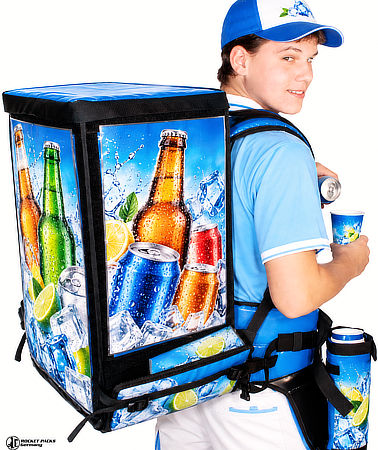
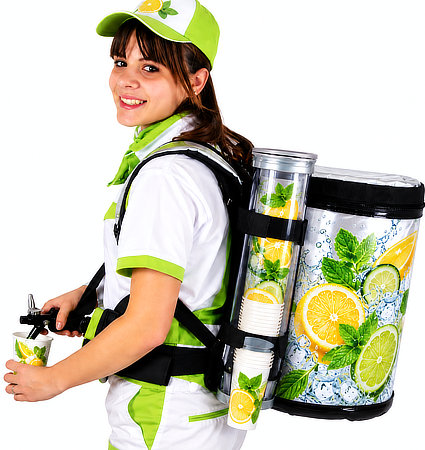
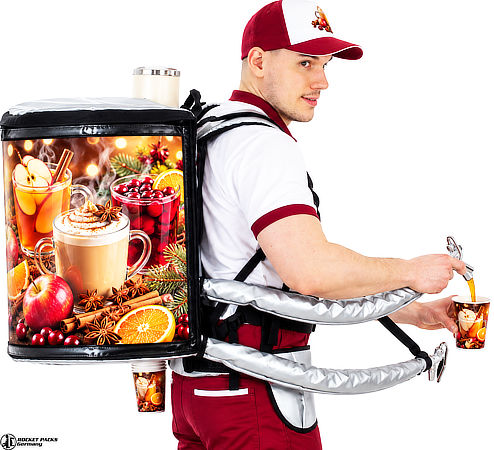
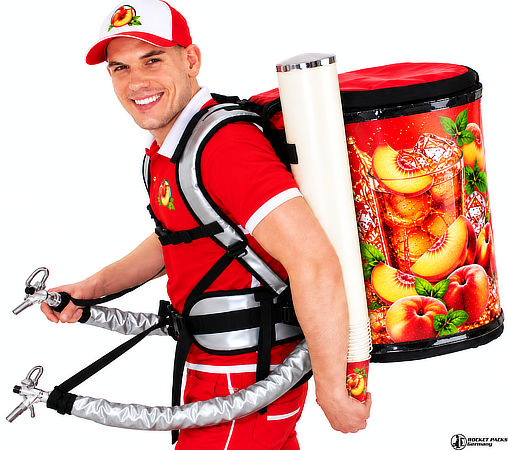
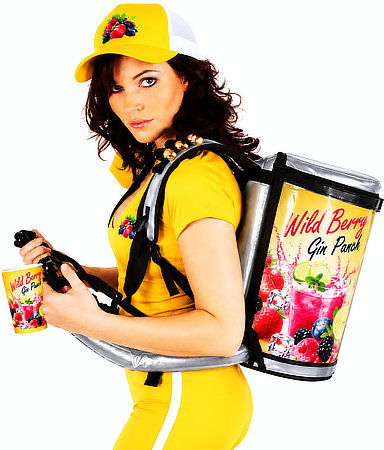
The overview should be used to identify a small group of potentially suitable systems. It brings together liquid dispensers, beer backpacks, coffee backpacks, compact drink packs, can-and-bottle carriers, sampling backpacks and multi-container models.
A final decision should not be made from the overview alone. The beverage, serving method, required output and route conditions must be compared with the current model-specific data.
How is the Rocketpacks range divided into functional product families?
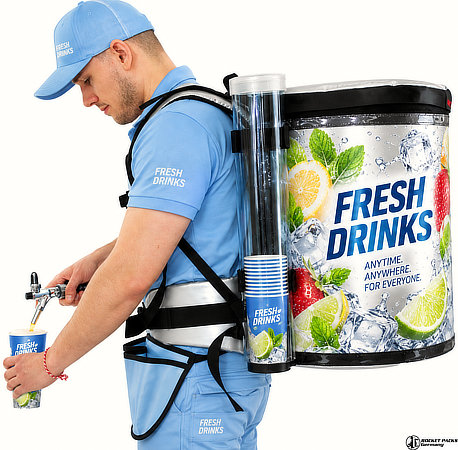
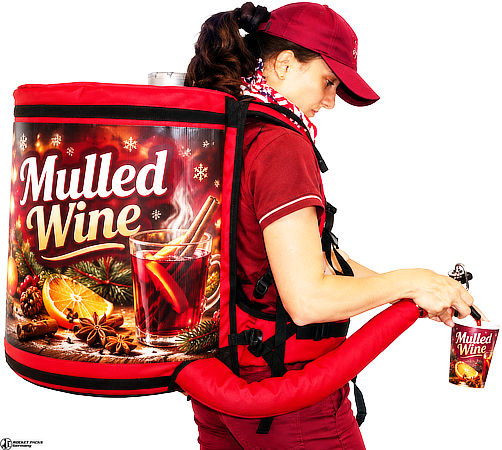
The first family dispenses liquid through a hose and tap from an internal container. A second family distributes sealed cans or bottles, while promotion and sampling backpacks carry smaller products, information or campaign materials.
Compact 5-litre units and larger single- or dual-container systems create further subgroups. The correct family is determined by the handover process rather than by capacity alone.
What does the Basic 15-litre designation indicate?
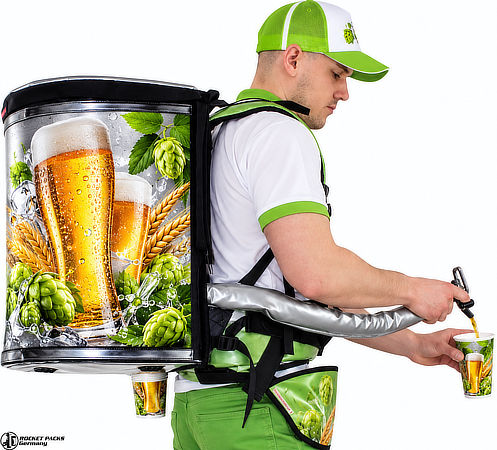
The Basic 15-litre model is presented as an entry-level beverage dispenser with a plastic container. Its product page describes versions for still and carbonated drinks, although the required pressure arrangement depends on the selected configuration.
Basic does not mean that every beverage can be used without technical review. Tank material, tap, pressure source and serving temperature still have to match the intended drink.
How should the Premium 11-litre beer system be distinguished from a general drink dispenser?
The Premium 11-litre beer model is intended for professional draught-beverage service and should be specified with the correct pressure and tap components. Beer introduces carbonation, foam and cleaning requirements that do not apply in the same way to gravity-fed still drinks.
A buyer should therefore request the complete beer configuration instead of ordering an 11-litre shell and adding unrelated accessories later.
What is the practical role of the Pro 11-litre model?
The overview presents the Pro 11-litre as a robust, insulated stainless-steel system. On the dedicated model page, the still-drink version is described with a bottom outlet that can dispense by gravity, while optional pressure support may be used when required.
Because Pro versions can be shown with different tap and pressure options, the quotation should state the beverage and exact outlet arrangement.
When does a 19-litre backpack make operational sense?
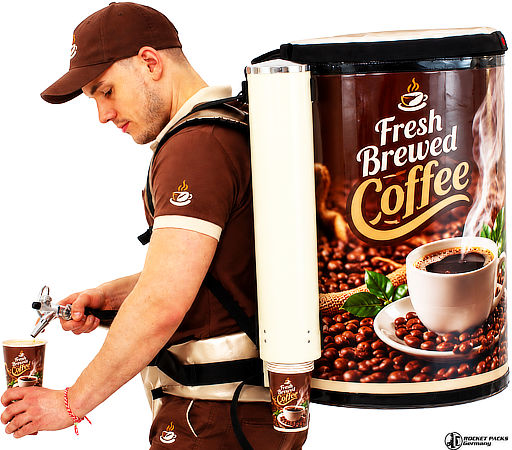
A 19-litre system reduces the frequency of returns when the route is long and demand is predictable. It may be relevant for coffee, tea, soft drinks or other compatible liquids depending on the selected model.
The greater container size also produces a heavier starting load. The planned fill quantity should be tested with the actual operator rather than assuming that the full nominal volume must always be used.
Why might a 5-litre drink backpack be selected?
A compact 5-litre model can suit short rounds, premium tasting, smaller staff members or situations where frequent refilling is easy. It can also reduce the quantity exposed outside the main preparation area.
The smaller tank does not automatically make service faster. Cup handling, tap position and the route still determine how efficiently each serving is completed.
What is the difference between the Drink Backpack 5-litre and the Drink Pack 5-litre?
The website lists these as separate product pages and buyers should not assume that the names identify one identical construction. Differences may include container type, cover, outlet arrangement, accessories and intended application.
The enquiry should use the exact page title or model reference and ask for the current specification. A capacity description by itself is not sufficiently precise.
When is the can-and-bottle dispenser the correct product family?
This system is intended for sealed packaged beverages rather than pouring liquid into a cup. Individual positions or compartments can support quick removal and keep the assortment organised while the operator moves.
Container diameter, height and total starting weight are the key selection values. A 500-millilitre bottle and a 500-millilitre can may require different holders even though their nominal contents are equal.
What is the purpose of the promotion and sampling backpack?
The sampling category supports campaigns where the carried items may be product samples, leaflets, giveaways or small packaged goods instead of a beverage tank. Its layout should follow the required interaction and stock-control process.
It should not be selected for liquid dispensing merely because it has the appearance of a backpack. Fluid-contact components and pressure equipment belong to the dedicated dispenser systems.
Why are dual-container backpacks offered?
Two-container systems can separate flavours, hot and cold products, or independent beverage lines. They can also provide a larger combined volume without relying on one central tank.
The operator must manage two fill levels, two outlets and a broader load distribution. A dual system is useful only when the second line has a defined operational purpose.
How do the 2 x 5, 2 x 11 and 2 x 15-litre concepts differ?
The numbers describe the nominal container arrangement, not one universally interchangeable chassis. Larger dual-tank models require more space and can become substantially heavier when filled.
Availability and current production status should be confirmed for each version. The overview may retain a product category even when a specific model is temporarily unavailable or no longer part of regular production.
Can one backpack be configured for every liquid mentioned on the page?
No. The page uses broad wording that refers to hot and cold, carbonated and non-carbonated products, and even states that any liquid can be dispensed. That language should not be treated as universal technical approval.
Viscosity, particles, alcohol content, acidity, temperature and food-contact compatibility can all affect suitability. The manufacturer should confirm the exact beverage before the system is ordered or filled.
How should Standard, Premium and Pro dispensing components be interpreted?
The overview shows Standard, Premium and Pro labels around dispensing guns and taps, but it does not provide one complete cross-model comparison. These labels may refer to different flow-control or construction levels depending on the product.
The quotation should identify the exact tap supplied and why it is appropriate for the beverage. A label alone does not define foam control, pressure rating or connection type.
What does the note that the Rocket Pump is not included mean?
One overview section states that the Rocket Pump is not included with the backpack. Buyers who need manual pressure generation should therefore verify whether a pump appears as a separate quotation item.
The system should not be assumed incomplete or complete from an image. The written scope must list the pressure source, hose, tap, connectors and any regulator required for operation.
Which included accessories require model-specific confirmation?
The overview refers to cup dispensers, insulated hoses, nozzles, advertising sleeves and backpack covers. These references may relate to a particular illustrated configuration rather than every product on the page.
Each required accessory should be written into the order line. This is especially important when several models are purchased for one event and their standard equipment differs.
How should the approximate full-weight statement be read?
The page gives an example of approximately 15 kilograms when full for a system in the 10- to 19-litre range. That figure cannot apply equally to every capacity, container and fill level.
The correct calculation adds empty equipment, actual beverage mass, cups, pressure hardware and accessories. The resulting load should be evaluated for the planned route and staff rotation.
Why should buyers be cautious with generic insulation claims?
The overview contains broad statements about maintaining a perfect temperature for hours, while individual model pages provide different reference periods and constructions. Ambient heat, starting temperature, fill quantity and service behaviour change the result.
Temperature performance should therefore be validated for the selected model and beverage. Generic promotional wording should not be converted into a guaranteed holding period.
What should be done when text or images on the overview appear unrelated to the product?
Some passages include generic marketing descriptions and an unrelated laptop-backpack feature list. Such content should not be used as technical evidence for a beverage dispenser.
Buyers should rely on the relevant model page, current data sheet, price list and written quotation. Any unclear or contradictory point should be resolved before approval.
How can a procurement team compare several models consistently?
Every candidate should be assessed with the same fields.
- Exact model name and current product status
- Container number, nominal size and material
- Approved beverage and temperature range
- Gravity, manual-air or carbon-dioxide operation
- Tap, hose and cup-dispenser configuration
- Empty weight and planned working load
- Cleaning method and replacement components
- Branding surfaces, price and delivery schedule
This comparison prevents one model from being chosen on a headline capacity while another is assessed on its complete equipment.
When should a sample unit be tested before a larger order?
A pilot is useful when the beverage, cup, pressure setting, route or staff profile has not previously been validated. The test should include filling, carrying, serving, refilling and cleaning.
The result can reveal whether a different tank size, tap or fleet mix is needed. A successful static presentation is not enough for a professional series decision.
Which details should accompany a product-range quotation request?
A precise enquiry should allow the manufacturer to exclude unsuitable models and compare the remaining options.
- Beverage or packaged-product description
- Hot, cold, still or carbonated operation
- Required serving or package quantity per round
- Cup dimensions or bottle and can measurements
- Venue, route and refill distance
- Preferred capacity and acceptable working load
- Pressure, tap, branding and accessory requirements
- Unit quantity, destination and required delivery date
These details turn the broad product overview into a technically defined shortlist and an order-ready quotation.