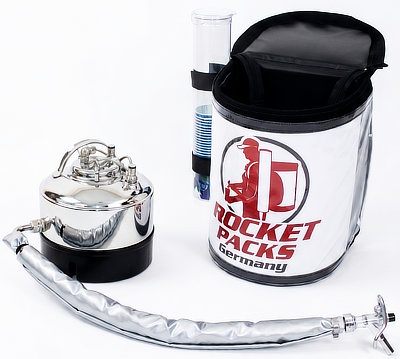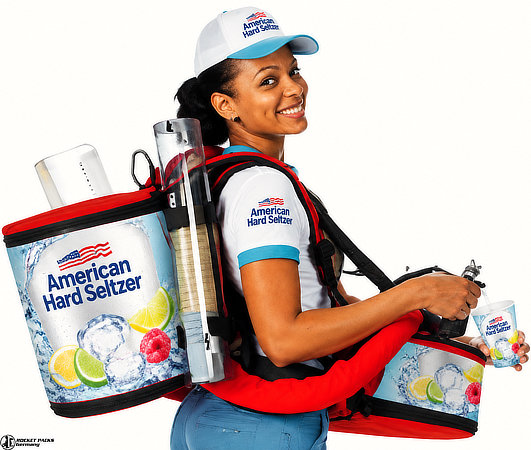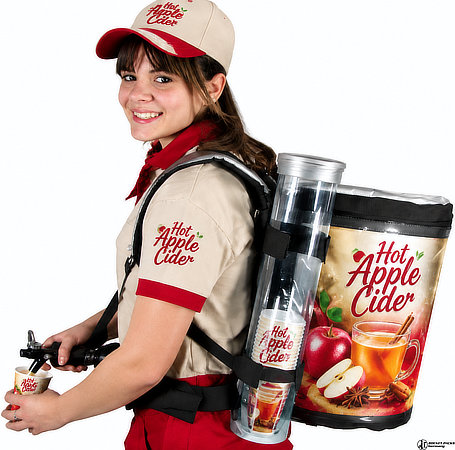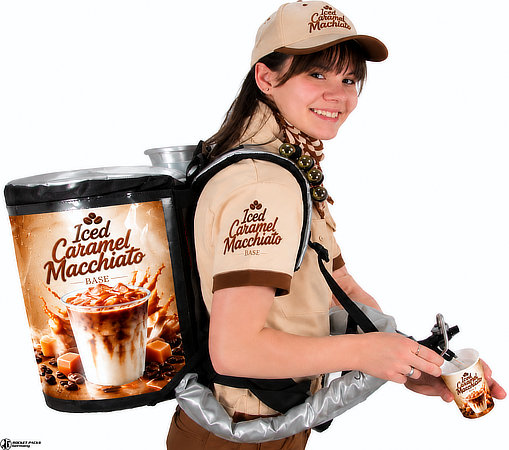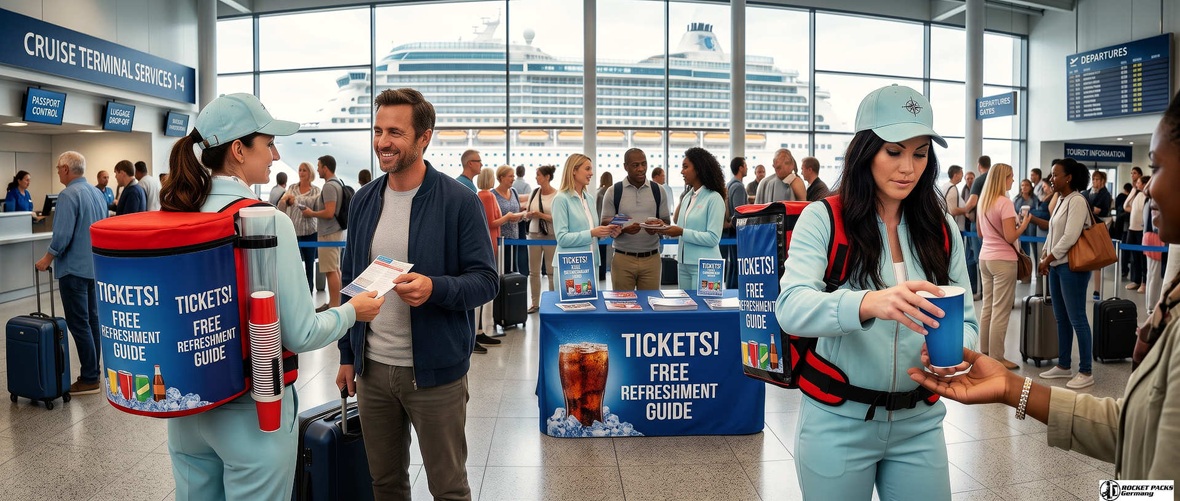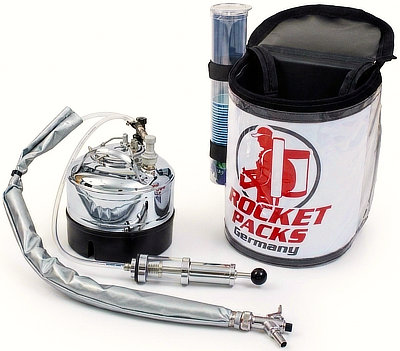
The Premium 5-litre drinkbackpack is the smallest stainless-steel-container model in the Rocketpacks range. Its compact dimensions, limited beverage quantity and adaptable dispensing equipment make it particularly relevant for tastings, indoor promotions and service rounds where a larger tank would create unnecessary weight or beverage surplus. :contentReference[oaicite:0]{index=0}
When does a five-litre beverage backpack make more sense than a larger model?
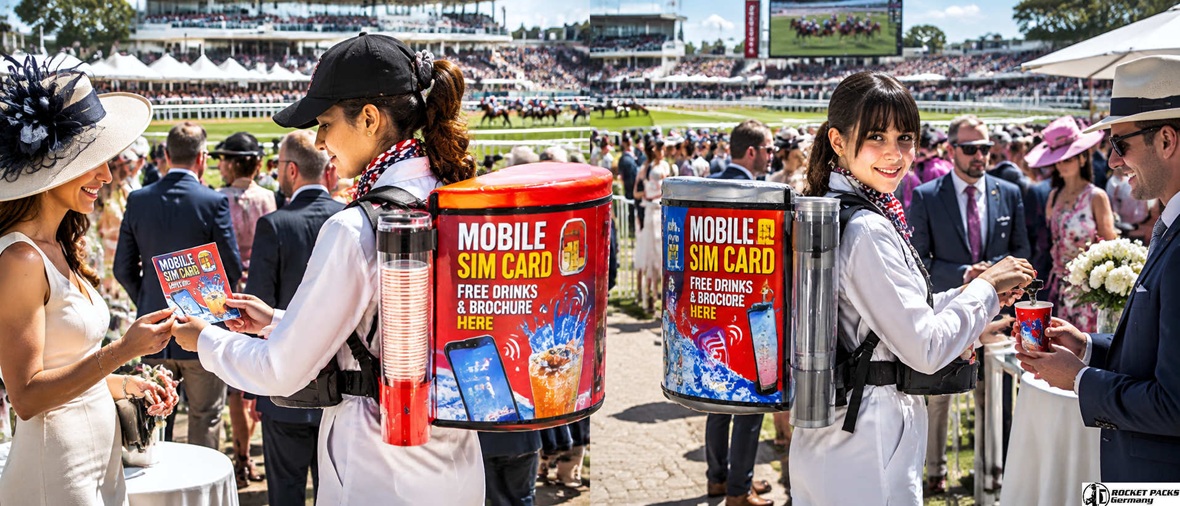
The five-litre version makes sense when mobility, small batches and frequent product changes are more important than carrying the largest possible beverage quantity. It is suitable for tastings, promotional distribution, short service rounds and locations where the operator has limited space to move.
A larger container reduces the number of refills but increases the filled weight and may leave more beverage unused after a short activity. The required quantity should therefore be based on the serving plan rather than selecting the highest available capacity automatically.
How many tasting portions can be planned from one filling?
A five-litre filling theoretically provides 50 portions of 100 millilitres or approximately 33 portions of 150 millilitres. The practical result will be lower when test pours, residual liquid in the line, foam, spillage or an intentionally smaller working fill are taken into account.
For sampling projects, the actual cup fill should be measured instead of relying only on the printed cup capacity. A cup sold as 150 millilitres may not be filled completely when space is required for foam or when a smaller tasting quantity is specified.
What is the approximate weight when the backpack is filled?
The empty Premium 5-litre system weighs approximately four kilograms. Five litres of a water-like beverage add about five kilograms, so the prepared unit weighs roughly nine kilograms before cups and items carried in the apron are included. :contentReference[oaicite:1]{index=1}
Beverages with a different density can alter this calculation. The completed setup should be weighed when the project requires a precise load value or when additional equipment is attached.
Why can the smaller capacity be useful for expensive or sensitive beverages?
A smaller batch limits the quantity exposed to event conditions at one time. This can be useful for premium juices, cocktail mixtures, speciality coffee, mulled wine or test products that should not remain in a mobile container longer than necessary.
The reserve quantity can stay in the appropriate heating or cooling equipment until the next refill. This separates beverage storage from the mobile serving period and reduces the amount that must be discarded if demand is lower than expected.
Which beverage container is installed in the Premium 5-litre model?
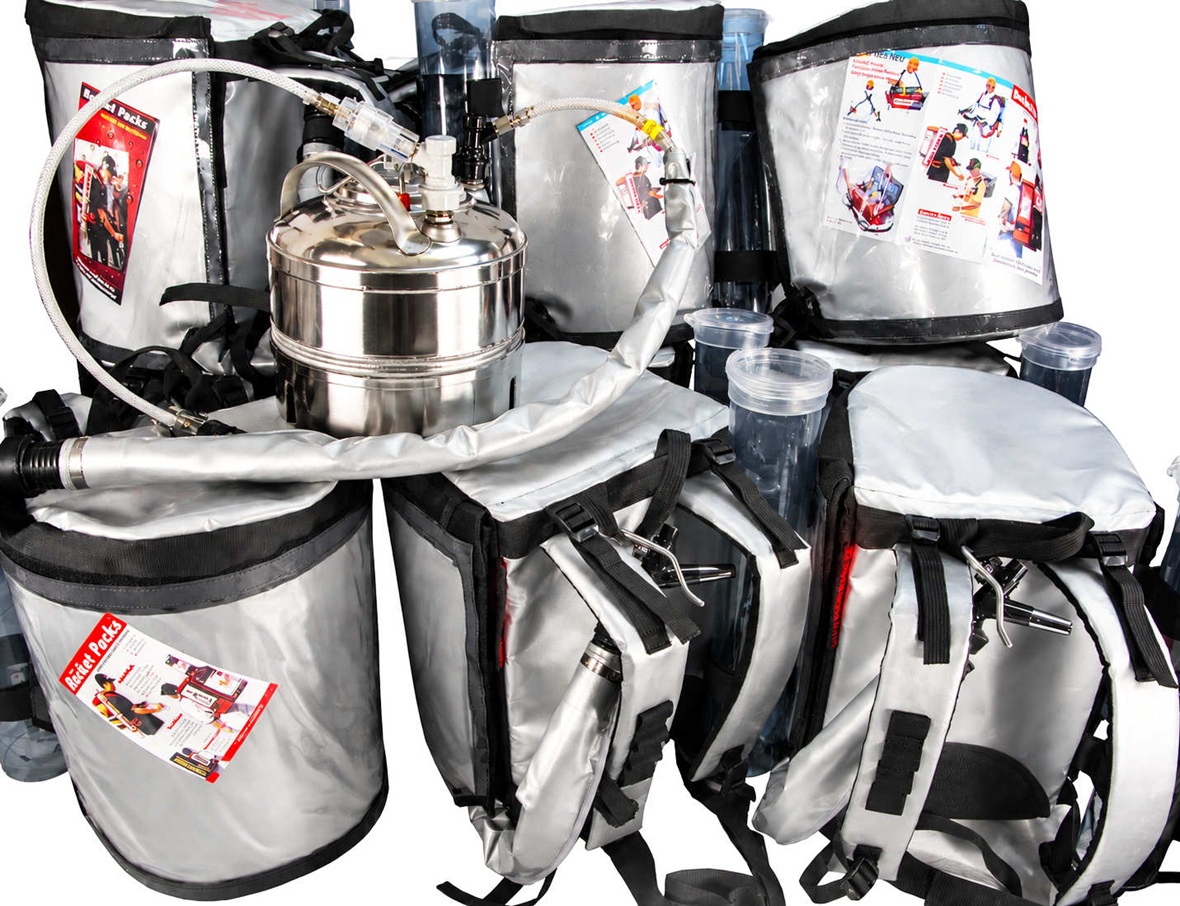
The model uses a five-litre AFG steel beverage container. The container, dispensing line and tap form the product path that must be selected and prepared for the intended drink. :contentReference[oaicite:2]{index=2}
The steel container distinguishes this model from smaller plastic-tank systems. Container material alone does not determine beverage suitability; seals, connections, hose, tap and operating temperature must also match the application.
Why is careful cleaning necessary after strongly flavoured drinks?
Strong aromas and ingredients do not remain only inside the tank. Coffee oils, fruit concentrates, spices, sugar and cocktail ingredients can also stay in the hose, around seals and inside the dispensing tap.
Cleaning must follow the entire beverage route. Delaying the procedure allows residues to dry and makes a later change to a mild-tasting product more difficult. The system should therefore be rinsed and cleaned promptly after the service period.
Can the same unit be used for coffee first and a cold drink later?
The unit can be prepared for another compatible beverage after the complete product path has been cleaned and rinsed. Simply emptying the container is not sufficient when the previous drink contains coffee oils, sugar, colouring ingredients or spices.
A test with water can help determine whether odour or visible residue remains. Where frequent changes between strongly contrasting drinks are planned, separate beverage lines or separately assigned systems may simplify event preparation.
How is the dispensing setup selected for still and carbonated beverages?
The setup is selected according to the beverage and the required pressure method. The Premium 5-litre model can be configured for still or carbonated drinks, but the correct equipment must be confirmed when the order is placed.
A carbonated application requires a pressure-capable arrangement. A still beverage may also require pressure depending on the supplied container outlet and dispensing route. The external appearance of the backpack does not reveal these internal differences.
What function does the hand-operated air pump perform?
The hand pump creates the pressure needed to move the beverage from the container through the line to the tap. It is pressure equipment and does not cool the drink or add dissolved carbon dioxide to it. :contentReference[oaicite:3]{index=3}
The operator should build pressure in controlled steps. Continuing to pump after a sufficient flow has been reached can make portion control more difficult. The permitted operating conditions of the supplied container and connections must not be exceeded.
How should the tap version be chosen?
The tap should be selected according to beverage behaviour and the level of flow control required. The Premium 5-litre system is available with a standard tap or a premium tap. :contentReference[oaicite:4]{index=4}
Still water used for short tastings may place different demands on the outlet than beer, a foaming premix drink or a hot beverage. The order should therefore state the exact product rather than requesting a tap based only on appearance or price.
Why is the five-litre model particularly suitable for indoor use?
Its compact body requires less storage and movement space than the larger Rocketpacks systems. The backpack measures approximately 36 centimetres high, 31 centimetres wide and 28 centimetres deep. :contentReference[oaicite:5]{index=5}
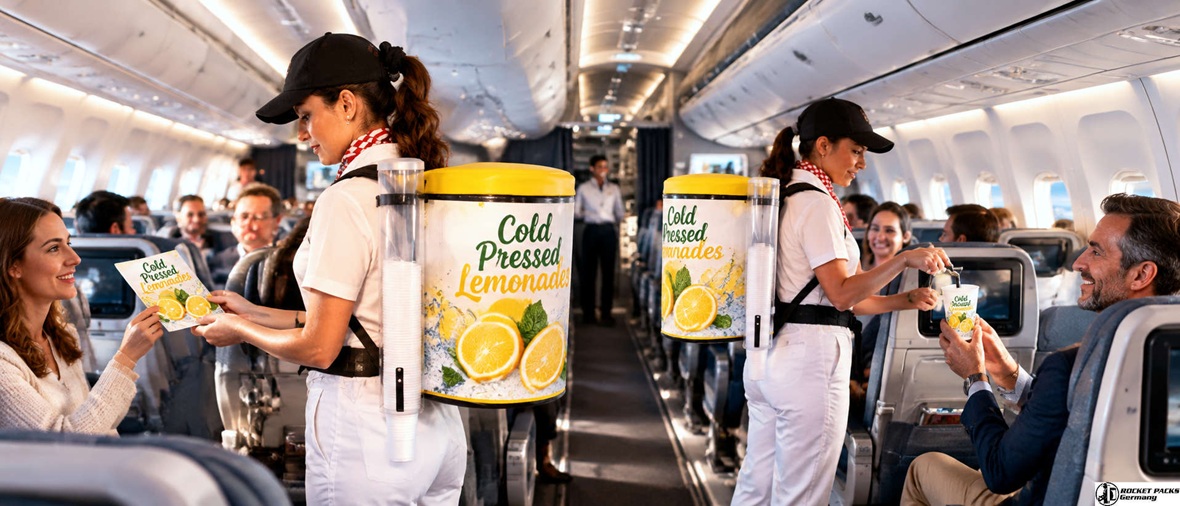
This can be useful in exhibition stands, retail spaces, shopping centres, clubs and reception areas. The actual route still needs to be checked for narrow entrances, furniture, displays and areas where customers may stand close to the operator.
How should the compact dimensions be considered when planning a trade-fair stand?
The operator needs enough room not only to walk but also to turn, remove a cup and position the tap. A narrow aisle may accommodate the backpack itself while still leaving insufficient space for a controlled customer interaction.
The route should be tested with the unit filled and with visitors or stand furniture represented realistically. Refill access must also remain available without carrying open beverage containers through the customer area.
What does insulation of up to about two hours mean for this model?
The insulated backpack slows temperature change for a limited period but does not actively heat or refrigerate the beverage. The stated duration depends on the initial temperature, ambient conditions, filling quantity and serving frequency. :contentReference[oaicite:6]{index=6}
With a five-litre batch, the more practical approach is often to plan short serving rounds and prepared refills. The drink should enter the container at the required serving temperature rather than relying on the backpack to correct it.
What must be considered when the system is filled with a hot drink?
Every beverage-contact component must be suitable for the intended filling temperature. The container should stand securely during filling, and the closure, hose and tap connections must be checked before the backpack is lifted.
The wearer should not carry a system with unexplained moisture, a damaged seal or a tap that does not close reliably. Hot liquid increases the consequence of even a small connection fault, so a test pour should take place away from customers.
Why should the final cup stack be tested before the promotion begins?
Cup capacity alone does not determine whether a stack fits the dispenser. Rim diameter, wall shape, material stiffness and nesting depth influence whether individual cups release cleanly.
The test should use a full stack from the actual delivery. A single sample can fit even though several nested cups jam, fall out together or move inside the holder while the operator walks.
How can the advertising area be prepared without printing directly on the backpack?
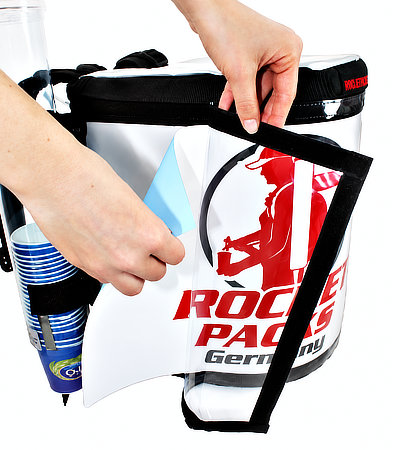
A flat paper design can be placed behind the transparent foil surface. The visible advertising area is approximately 30.5 centimetres high and 64.5 centimetres long. :contentReference[oaicite:7]{index=7}
The layout should be tested on the filled backpack because the surface curves around the container. Logos, product names and important information should remain away from seams and outer edges where visibility can be reduced.
When is the optional promotion flag useful?
The flag can provide additional visibility when the operator must be recognised above displays or groups of people. The optional version uses a telescopic pole approximately 140 centimetres long. :contentReference[oaicite:8]{index=8}
Before using it indoors, door heights, suspended signs, lighting equipment and stand constructions must be checked. The additional height may be unsuitable in low rooms or crowded routes even when the backpack itself fits comfortably.
What can be stored in the supplied vendor apron?
The apron includes three front pockets for items required during mobile service. These may be used for payment equipment, napkins or small service accessories, provided that their weight and arrangement do not interfere with movement. :contentReference[oaicite:9]{index=9}
Food-contact parts should not be stored together with money, used cleaning cloths or unrelated objects. Each pocket should have a defined purpose so that the operator does not need to search for equipment while holding a filled cup.
Why might no beverage come out even though the container is filled?
A missing flow can result from an incorrectly connected dispensing hose or an incomplete connection between the line and the outer valve. The line should also be checked for sharp bends or compression inside the cover. :contentReference[oaicite:10]{index=10}
Pressure-operated versions additionally require sufficient operating pressure. Before adjusting the pump, the physical hose route and all connections should be inspected. Increasing pressure will not correct a disconnected or blocked line.
What should be inspected before the drinkbackpack is placed on the operator?
The filled system should be checked while standing securely on a suitable surface.
- container closure and seals are correctly positioned,
- beverage and pressure connections are fully engaged,
- hose is routed without compression,
- tap opens and closes without uncontrolled dripping,
- test portion flows as expected,
- cup stack fits the installed holder,
- advertising insert is secured behind the foil,
- waist, chest and shoulder straps are adjusted for the wearer.
The unit should only enter the customer area after the beverage path and carrying system have both passed this check.
Which information is required for a precise Premium 5-litre quotation?
The enquiry should describe the beverage and planned service conditions rather than requesting only a five-litre backpack.
- exact beverage or recipe,
- still or carbonated application,
- cold or hot serving temperature,
- standard or premium tap requirement,
- portion size and cup rim diameter,
- expected number of portions per round,
- number of backpack systems,
- advertising insert or promotion flag requirement,
- delivery destination and event date.
These details allow us to confirm the container, dispensing equipment and accessories for the actual application instead of relying on a general five-litre configuration.